
Shell Spring
Alerts
2 more for Yellowstone National Park
About
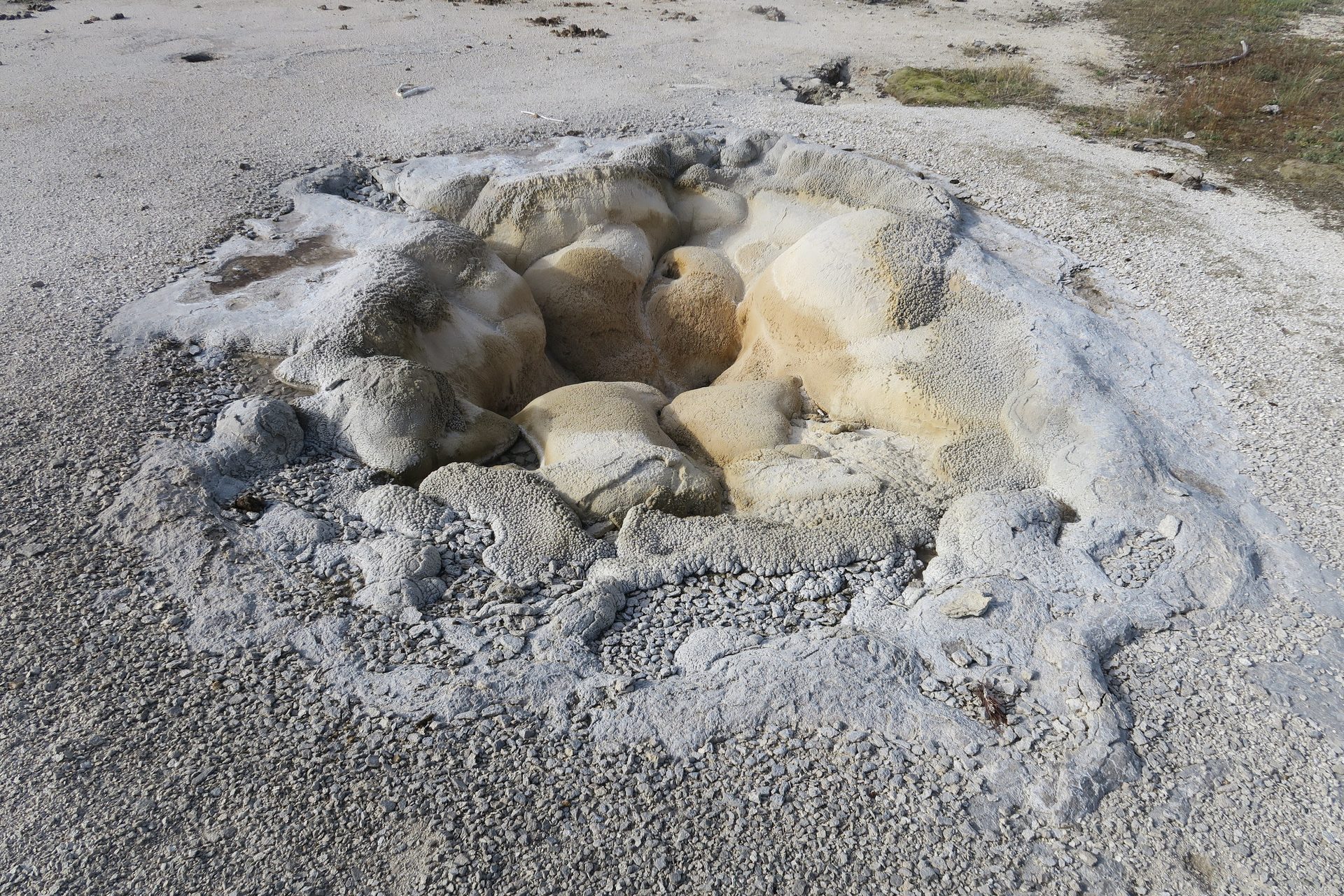
Shell Spring or Shell Geyser is a depression with built up, rounded, yellow, solidified sinter with a small pool at the center that may be reminiscent of a shell. Hard sinter forms a defined feature area before soft sinter and vegetation begins. Shell Geyser eruptions are cyclical, with an active phase that slowly fills the pool area of the feature, a final long eruption when water is overflowing, then the pool drains and remains quiet for several hours. Cycles can occur over hours to days. High activity prevented conductivity measurements.
Shell Spring has an average temperate of 196.5°F (91.4°C) and an average pH of 8.5.
Geysers
Geysers have constrictions in their plumbing systems that prevent water from moving freely to the surface where heat would escape. Water beneath the constrictions creates a buildup of steam. Eventually the steam pushes water past the constrictions and the geyser erupts.
Hot Springs
Hot springs are the most common hydrothermal features in Yellowstone. Their plumbing has no constrictions.
Superheated water cools as it reaches the surface, sinks, and is replaced by hotter water from below.
This circulation prevents water from reaching the temperature needed to set off an eruption.
Use Caution in Hydrothermal Areas
Stay on boardwalks and designated trails.
Hydrothermal water can severely burn you.
Never run, push, or shove.
Supervise children at all times.
Do not scratch hydrothermal mats.
You are responsible for your safety.
Think safety, act safely. Yellowstone is a dangerous place.
From the National Park Service · nps.gov
Look inside
Getting there
Directions
2 Officers Row, Yellowstone National Park, WY 82190
Go to Yellowstone National Park.
Get directions