
A Wildlife Paradise
Alerts
3 more for Yellowstone National Park
About
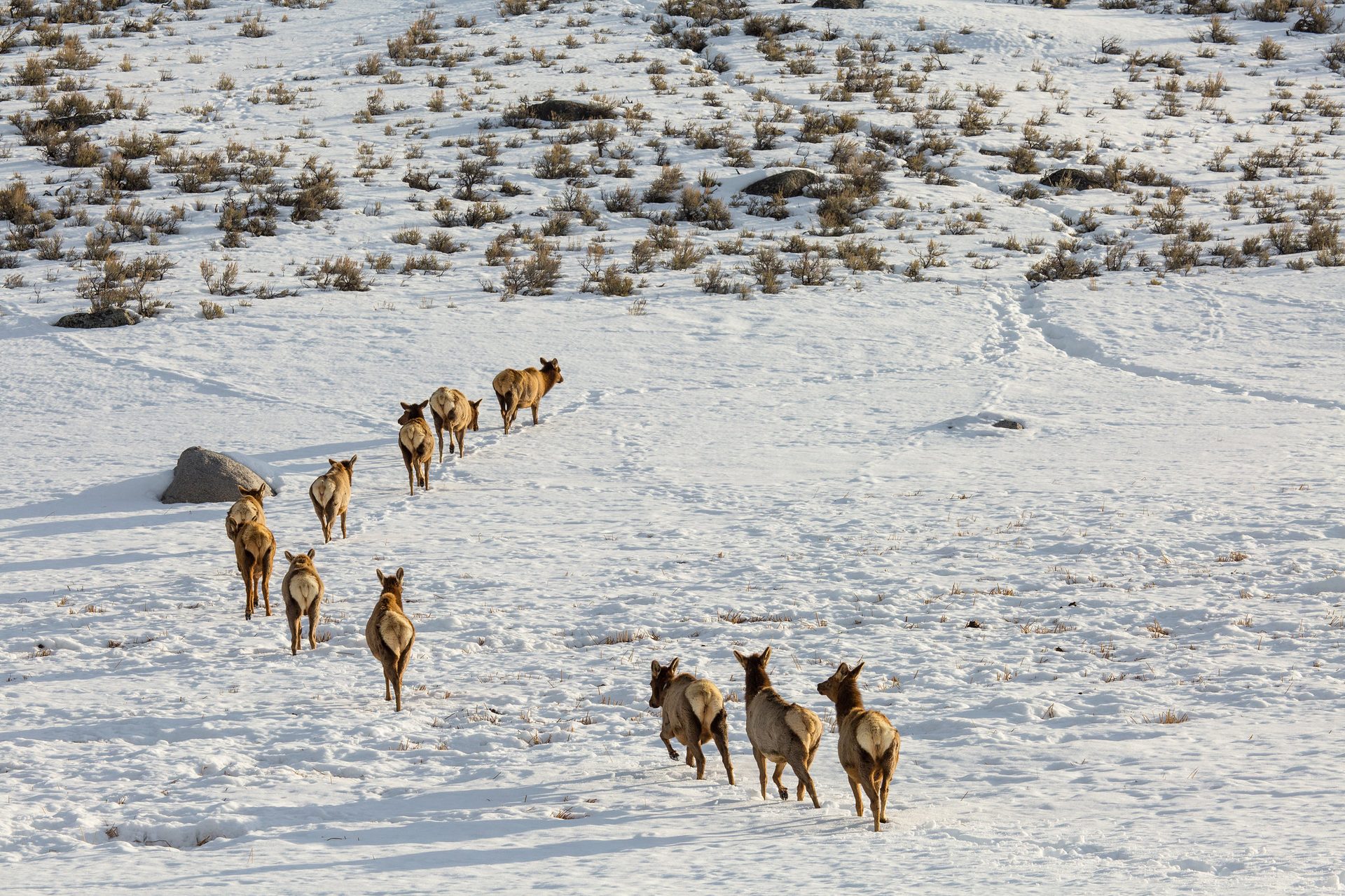
Many of the park’s ungulates spend the winter in Yellowstone’s northern range. The area provides critical winter habitat for elk, bison, deer, and pronghorn.
Elevations are lower and the area receives less snow than elsewhere in the park. Often the ridge tops and south-facing hillsides are clear of snow, a result of wind and sun.
Managing Elk Populations
Until the mid-1960s, park managers actively managed the elk and bison of Yellowstone. Elk population limits were determined according to formulas designed to manage livestock. When elk reached those limits, park managers “culled” or killed the animals to reduce the population. Bison were likewise heavily managed.
Modern Management
In 1963, an advisory group made of prominent scientists released a report recommending national parks “maintain biotic associations” within the context of their ecosystem based on scientific research. The recommendations, known as the Leopold Report, established the framework for park management still used today throughout the National Park System. By adopting this management philosophy, Yellowstone went from an unnatural managing of resources to “natural regulation”—today known as Ecological Process Management.
From the National Park Service · nps.gov
Look inside
Getting there
Directions
2 Officers Row, Yellowstone National Park, WY 82190
Go to Yellowstone National Park.
Get directions