
Glacier View Turnout
Alerts
4 more for Grand Teton National Park
About
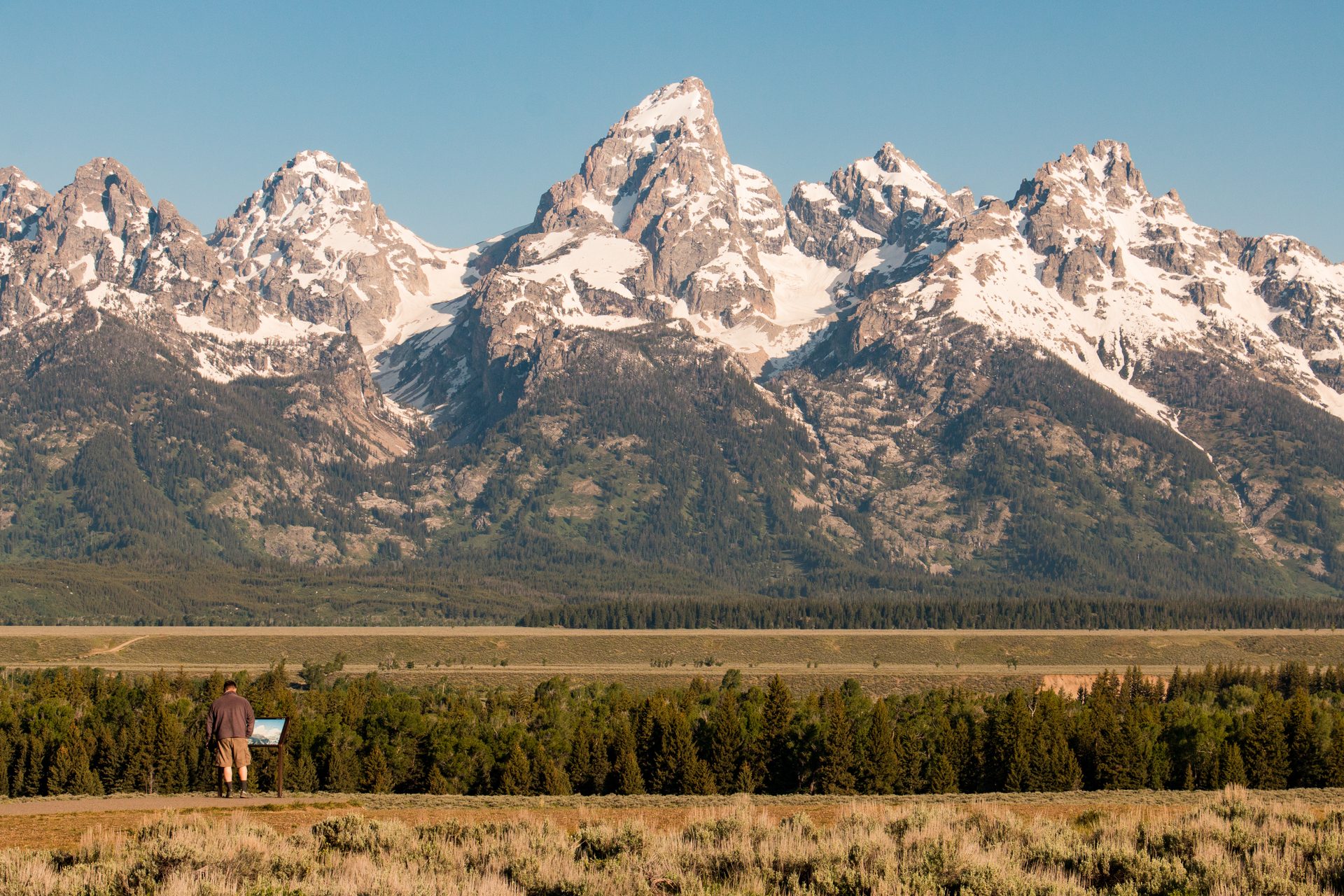
Glaciers played an important part in shaping the Teton range. During multiple Ice Age periods, massive glaciers flowed down from the high peaks of the Tetons and spread across Jackson Hole as an immense sea of ice. As the glaciers moved, their massive size gave them incredible power. Like a giant sheet of sandpaper, glaciers scraped and carved the landscape beneath them. Can you see the broad U-shaped valleys, steep cliffs, and knife-edged ridges in the mountains?
Today, small glaciers are still here and are sustained by the snow that falls every winter. Annually, Grand Teton typically receives hundreds of inches of snow. Some of this snow does not melt out, but turns into dense, compacted snow and eventually morphs into ice. However, glaciers are sensitive indicators of climate change. All glaciers in the park have retreated since the late 1800s, although there have been brief periods of advance, most notably the mid-1970s to mid-1980s.
From the National Park Service · nps.gov
Look inside
Getting there
Directions
103 Headquarters Loop, Moose, WY 83012
Go to Grand Teton National Park.
Get directions