Covered Wagon at Fort Laramie
About
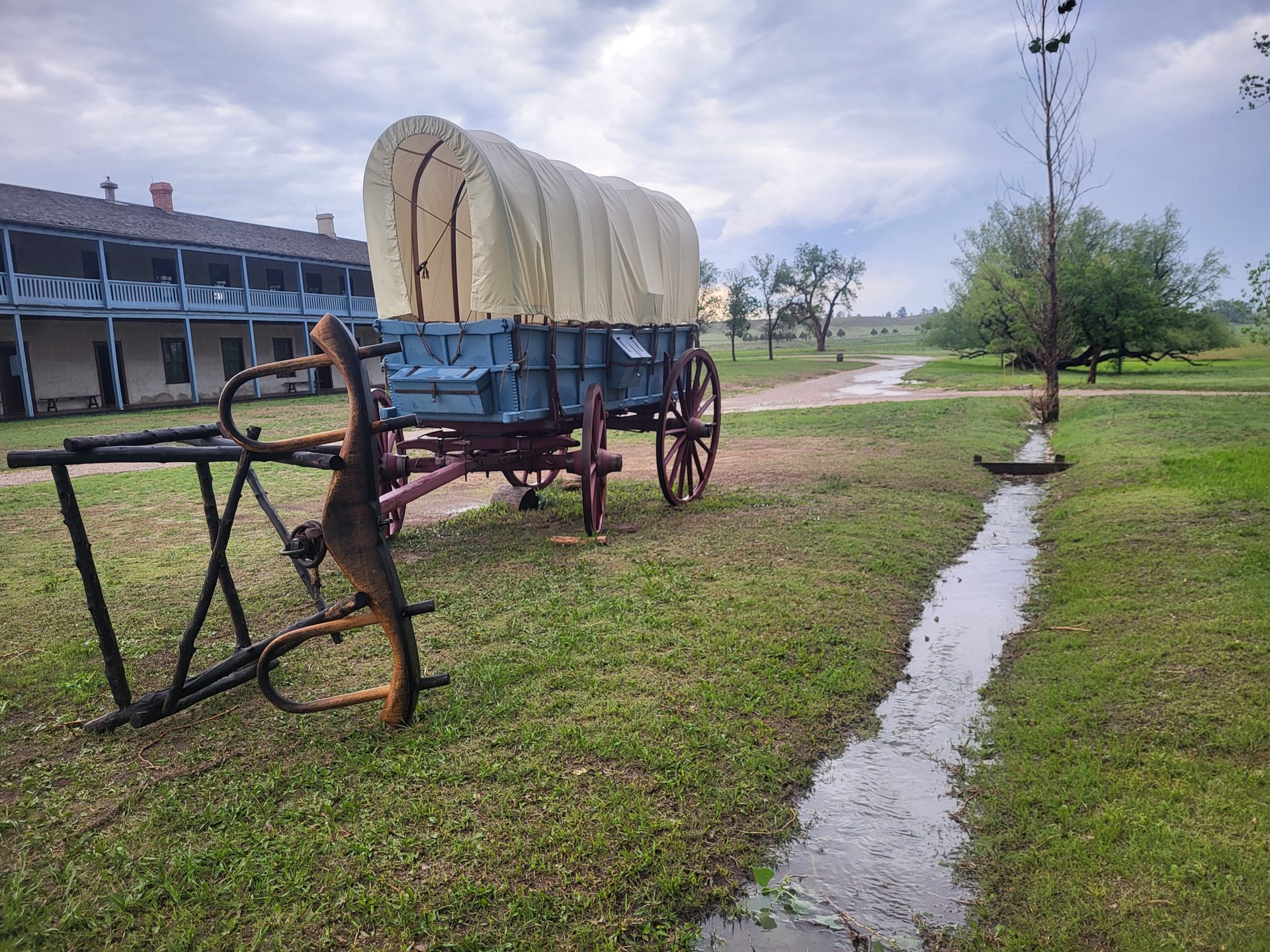
The covered wagon before you is an identical replica to what emigrants traveling across the West used. It is four feet wide by eight feet long and typically would require between two to six oxen to pull. Nicknamed the “Prairie Schooner,” due to its white cover being out of the same material as ships sail, and that the wagon had to cross the sea of prairie, it became the standard of travel throughout the West. A trip for an average family cost about 1,000 dollars, 400 for the wagon, 400 for six months’ worth of food, 200 for oxen, horses, or mules, and 200 for other supplies and materials.
Notice the iron covering the wheel on the wagon. The iron helped not only protect the wheel but made the wagon more easily traverse rough, rocky, terrain. It is these wheels that cut through rock that left wagon ruts from this era. Head to Guernsey Ruts twelve miles west of Fort Laramie to see them today. Due to the wheels and terrain, the wagon would be too rough for travelers to ride inside unless they were sick or injured. Most walked alongside the wagon during the over 2,000-mile journey that started in either Independence or St. Joesph Missouri, or present-day Ohama Nebraska. Traveling only 10-15 miles a day, they left typically in April with hopes of arriving in early October, before winter set in.
From the National Park Service · nps.gov
Look inside
Getting there
Directions
At Fort Laramie National Historic Site
965 Gray Rocks Road, Fort Laramie, WY 82212
Go to Fort Laramie National Historic Site.
Get directionsContact
Links
Nearby
Other places within a few minutes' walk of Covered Wagon at Fort Laramie.