Burnwood Trail Stop 3: Forest Succession
Alerts
2 more for New River Gorge National Park & Preserve
About
Old-Growth Forest Hike Stop 3 - Forest Succession
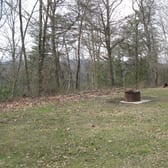
The forest to your right is in stark contrast with the forest along the rest of this trail. This young forest was an old field probably used for livestock, hay, or a yard. Aerial imagery from Google Earth reveals that the National Park Service stopped mowing the field in the mid-2000s and young tulip poplar trees have quickly infilled. Tulip poplars are not tolerant of shade and are quick to establish in open areas with high sunlight.
This young forest is an example of a secondary, early successional forest that is in the beginning stages of development. Succession is the process by which vegetation communities change in species composition and structure through time as the ecosystem matures. This forest is considered even-aged, where all of the trees began growing at the same time after mowing stopped. Old-growth forests are late-successional and uneven-aged, where trees naturally grow to their upper age limits and numerous canopy layers and ages of trees can be found. The uneven-age of older forests is evidence that the trees didn’t all establish after a large human disturbance that cleared the entire area. Instead, numerous smaller events such as infrequent windstorms create gaps in the canopy and allow for new growth to establish once sunlight reaches the forest floor.
From the National Park Service · nps.gov
Getting there
Directions
104 Main Street, Glen Jean, WV 25846
Go to Burnwood Trail.
Get directionsContact
Links
Nearby
Other places within a few minutes' walk of Burnwood Trail Stop 3: Forest Succession.
 Burnwood Group CampsiteOpen 24 hours