
Parade Ground Tour Stop 7: Double Infantry Barracks
About
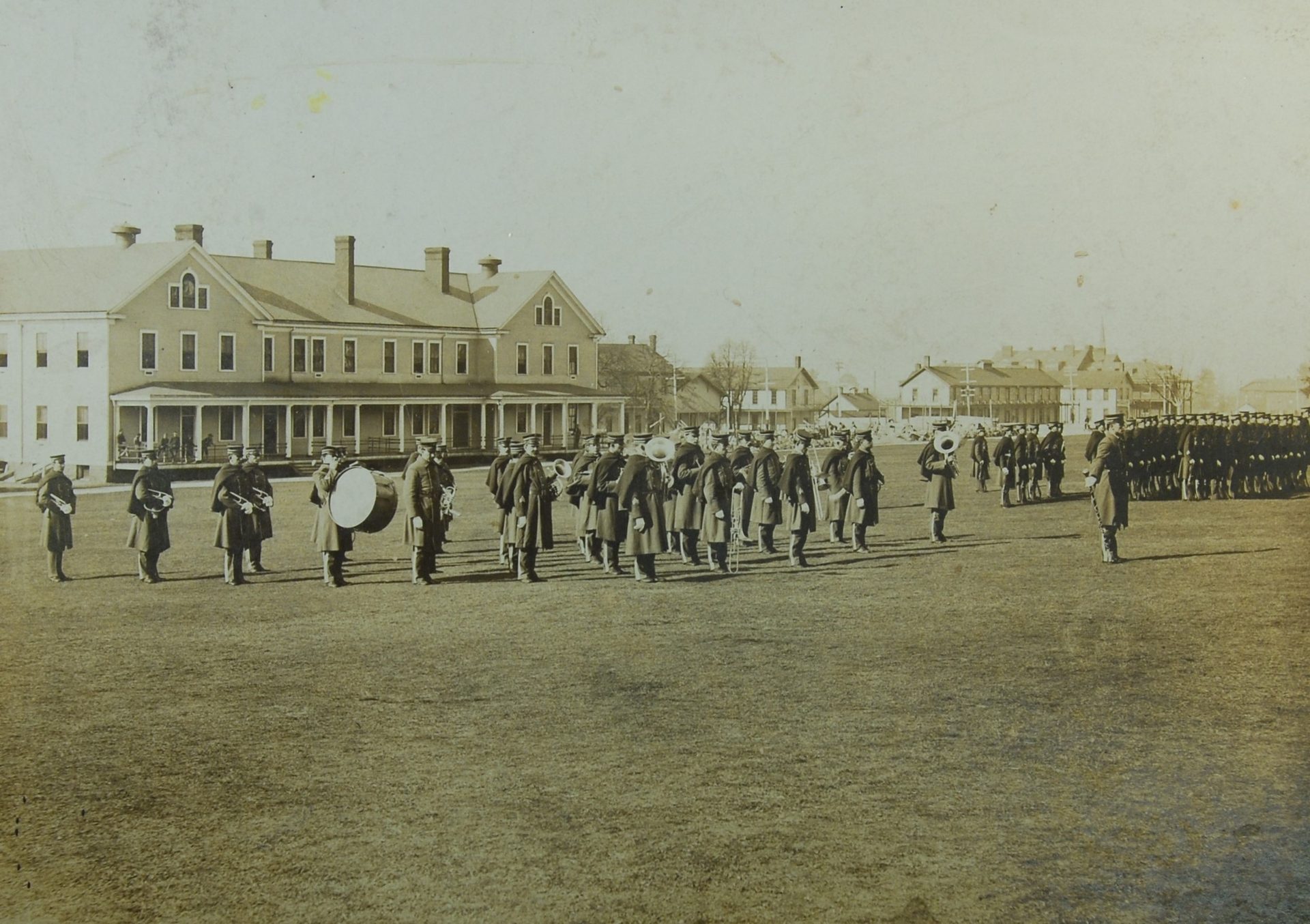
The row of U-shaped buildings in front of you are infantry barracks, constructed for enlisted men between 1904 and 1907. This was a busy time at Vancouver Barracks. With the outbreak of the Spanish American War in 1898, the United States expanded overseas, claiming territory in the Philippines and Guam, and maintaining a presence in China during the Boxer Rebellion. With its proximity to the Pacific, Vancouver Barracks became a staging ground for campaigns like these, expanding in size as hundreds of new troops trained at the post on their way overseas. Other soldiers were stationed here, mobilizing for regional actions such as labor disputes, natural disaster relief, and support for mapping and mining expeditions in the newly purchased Alaska Territory. Many of the remaining Army buildings you see in this area, including those on your left, were built to accommodate this surge in troops.
Among the newcomers were 103 members of Company B, 24th Infantry, a unit of one of the four African American regiments in the US Army, often known as “Buffalo Soldiers.” Arriving at Vancouver Barracks on April 3rd, 1899, these soldiers spent thirteen months here on their way to the Philippines and lived in barracks similar to these.
Like the other units assigned to Vancouver Barracks, Buffalo Soldiers participated in drills, training exercises, guard duty, and ceremonial activities such as parades and funerals. One of these funerals honored Moses Williams, a Buffalo Soldier of the 9th Calvary and Medal of Honor recipient who had retired to Vancouver. Although much of their work was similar to that of their white peers, racism still influenced their assignments. For instance, the barracks’ Black soldiers found themselves more often assigned to maintenance-type work and janitorial duties, a common trend for these units. Racial barriers notwithstanding, however, the soldiers of Company B played a role in important regional events. In May of 1899, members of Company B were dispatched to impose martial law in the Coeur d'Alene mining area of Idaho during one of the most significant labor-capital disputes of the 20th century.
Off duty, Company B became a part of the broader communities of Vancouver and Portland. Local newspapers reported that the soldiers attended dances and parties, and that their baseball team, the “Hard Hitters,” competed against the local high school. Some, such as Pvt. James G. Cole, also used community platforms such as the Oregonian to advocate for Black soldiers. His 1899 letter decried racism among white officers and called for Black units to be led by Black officers.
If you are interested in learning more about the Buffalo Soldiers at Vancouver Barracks, you can read more on our website.
How have you encountered and responded to injustice in your own community?
From the National Park Service · nps.gov
Look inside
Getting there
Directions
At Fort Vancouver National Historic Site
1501 E Evergreen Blvd., Vancouver, WA 98661
Go to Fort Vancouver National Historic Site.
Get directionsContact
Links
Nearby
Other places within a few minutes' walk of Parade Ground Tour Stop 7: Double Infantry Barracks.
Nw Legacy Law, P.s.Hours not listed Eternal Arts Kung FuHours not listed Arden Gate Studio Permanent MakeupHours not listed