
Stop 1-Steep Grade and the Orange Special Legend
About
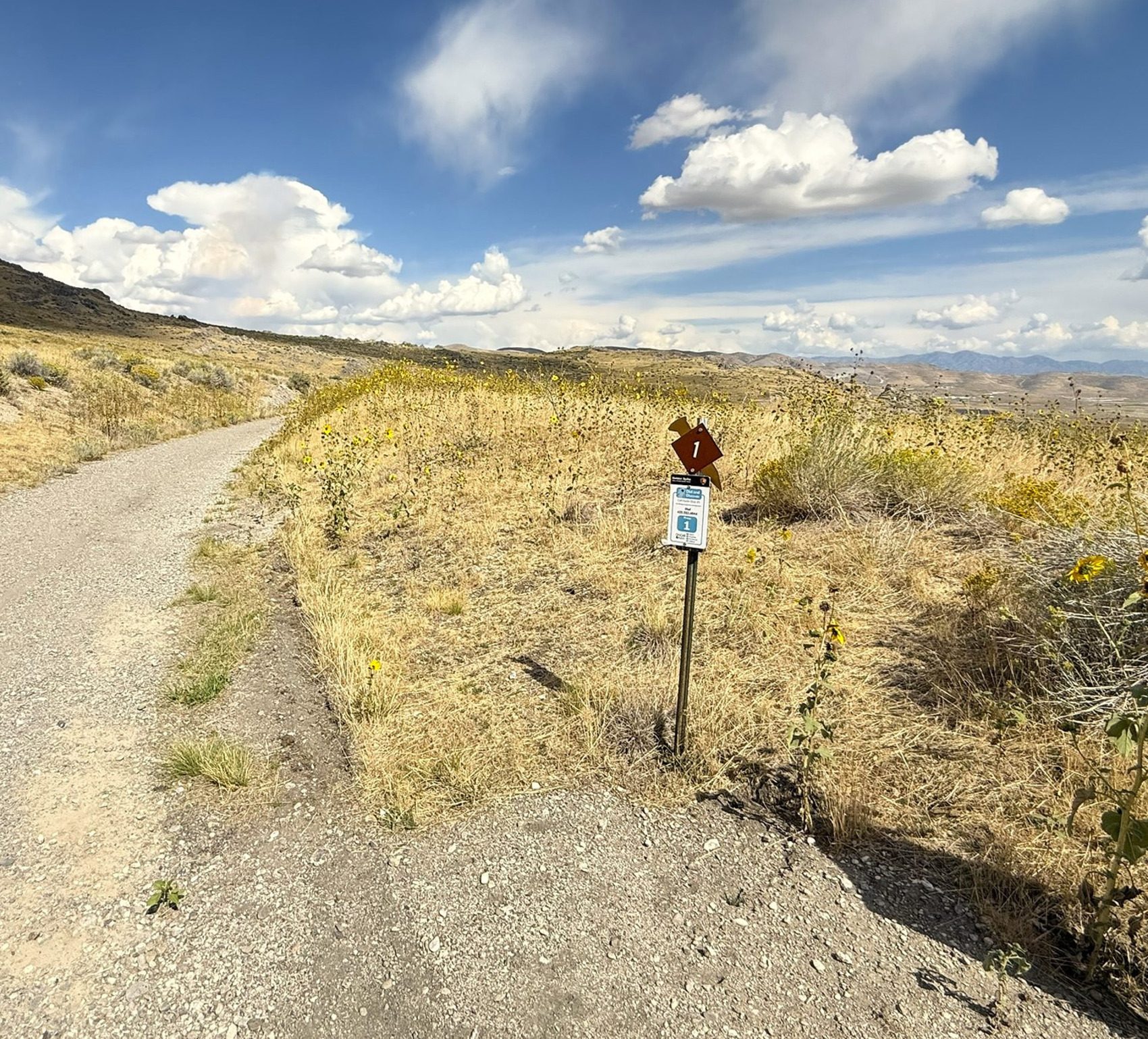
Directly across from where you step onto the railroad grade is a plaque referencing the so-called “Orange Special” wreck. While no direct historical evidence confirms that this wreck occurred, the story has been passed down over time as part of the area’s railroad lore. Interpreted today, it offers a useful way to understand the challenging conditions trains faced while operating through Promontory.
The steep 1.6% grade that continues to your right along the paved road helps explain how such an incident could have happened. On the transcontinental route, only a short stretch near the summit of the Sierra Nevada was steeper than the grade here. Because of these demanding slopes, all freight trains and many long passenger trains required at least one helper—often called a “hog” locomotive—to assist them while climbing or descending Promontory’s east slope.
The Pacific Railroad Act of 1862 limited the maximum railroad grade to 2 percent. This standard helped ensure locomotives could pull heavy loads uphill while reducing the risk of loss of control or derailment on downhill runs. To meet this requirement, railroad engineers avoided the most direct routes, instead designing track alignments with broad curves and gradual turns—features still visible along the grade today.
From the National Park Service · nps.gov
Look inside
Getting there
Directions
At Golden Spike National Historical Park
6200 North 22300 West, Promontory, Utah, UT 84307
Go to Golden Spike National Historical Park.
Get directions