
Lower Canyon Overlook
Alerts
1 more for Dinosaur National Monument
About
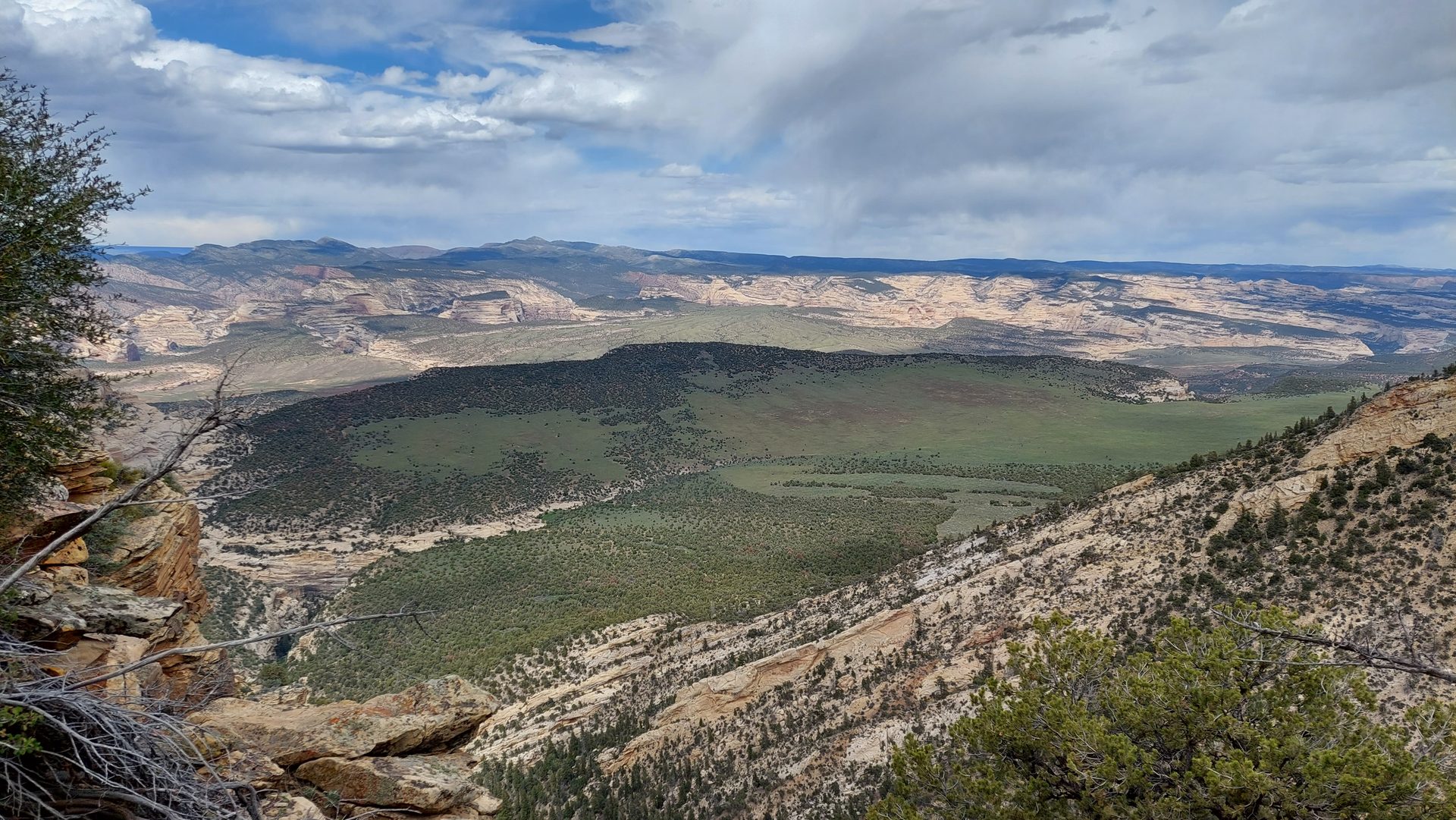
The vegetation here is markedly different from that of the surrounding sagebrush steppe. This north facing slope experiences less direct sunlight and therefore retains more moisture. These conditions encourage the growth of large trees, like aspens and Douglas-firs. This montane forest is only found over 7000 feet elevation and covers less than 5% of Dinosaur’s
211,000 acres.
Douglas-fir trees live an incredibly long time; some are hundreds of years old. Over the years, they have survived many harsh winters and provided animals with food and shelter. Each cone contains 20 to 30 winged seeds, dispersed by wind. These seeds provide critical nourishment to a variety of birds and small mammals like mice, voles, shrews, and chipmunks.
Aspen trees have also adapted to this higher elevation. The thin white layer of outer bark conceals a green layer underneath. This part of the bark is photosynthetic, allowing these trees to produce energy throughout the winter when leaves are absent. An entire stand of trees is often only one individual organism sharing an interconnected root system. As conifers grow and eventually replace aspen trees, the root system remains dormant underground for years. While a forest fire may destroy a conifer stand, it provides aspens with an opportunity to regrow, beginning the cycle anew.
From the National Park Service · nps.gov
Look inside
Getting there
Directions
11625 E 1500 S, Jensen, UT 84035
Go to Dinosaur National Monument.
Get directions