Life of Hoodoos wayside
Alerts
2 more for Bryce Canyon National Park
About
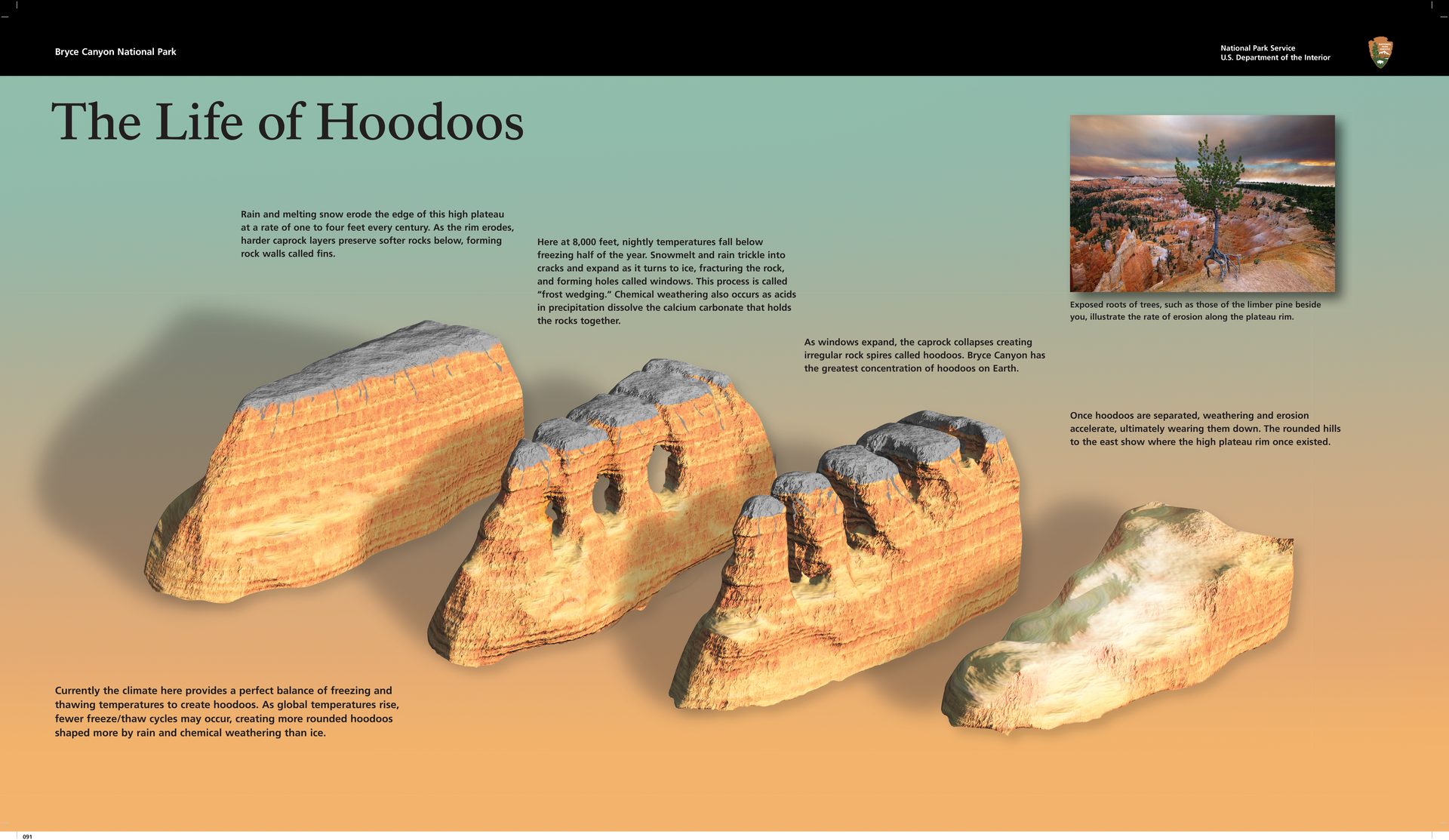
Rain and melting snow erode the edge of this high plateau at a rate of one to four feet every century. As the rim erodes, harder caprock layers preserve softer rocks below, forming rock walls called fins.
Here at 8,000 feet, nightly temperatures fall below freezing half of the year. Snowmelt and rain trickle into cracks and expand as it turns to ice, fracturing the rock, and forming holes called windows. This process is called "frost wedging."
Chemical weathering also occurs as acids in precipitation dissolve the calcium carbonate that holds the rocks together. As windows expand, the caprock collapses creating irregular rock spires called hoodoos. Bryce Canyon has the greatest concentration of hoodoos on Earth.
Currently the climate here provides a perfect balance of freezing and thawing temperatures to create hoodoos. As global temperatures rise, less frequent freeze/thaw cycles may occur, creating more rounded hoodoos shaped more by rain and chemical weathering than ice.
From the National Park Service · nps.gov
Look inside
Getting there
Directions
Go to Sunrise Point.
Get directionsContact
Links
Nearby
Other places within a few minutes' walk of Life of Hoodoos wayside.