An Ever-changing Landscape wayside
Alerts
2 more for Bryce Canyon National Park
About
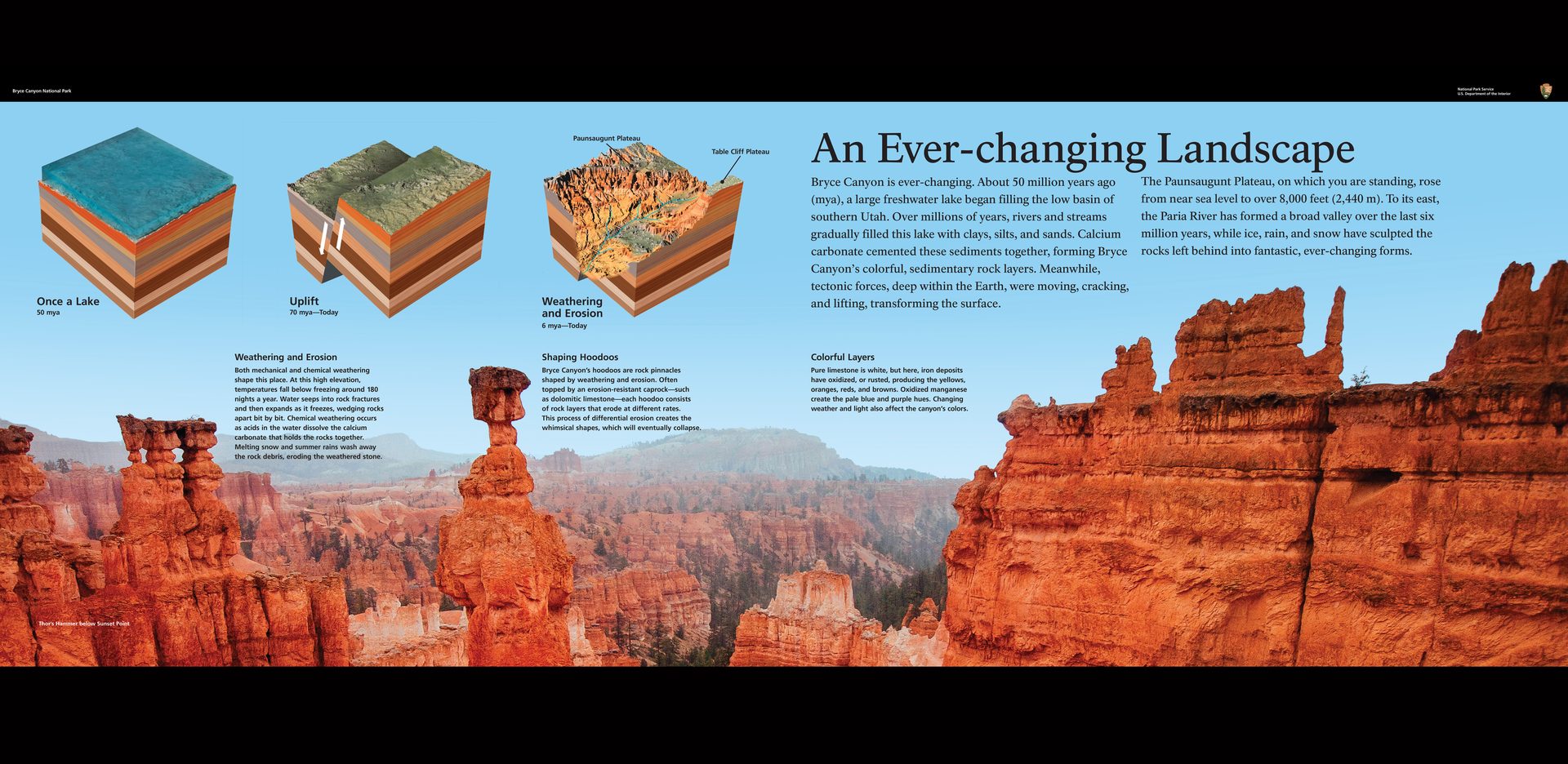
Colorful Layers Pure limestone is white, but here, iron deposits have oxidized, or rusted, producing the yellows, oranges, reds, and browns. Oxidized manganese creates the pale blue and purple hues. Changing weather and light also affect the canyon’s colors. Bryce Canyon is ever-changing. About 50 million years ago (mya), a large freshwater lake began filling the low basin of southern Utah. Over millions of years, rivers and streams gradually filled this lake with clays, silts, and sands. Calcium carbonate cemented these sediments together, forming Bryce Canyon’s colorful, sedimentary rock layers. Meanwhile, tectonic forces deep within the Earth, were moving, cracking, and lifting, transforming the surface.
From the National Park Service · nps.gov
Look inside
Getting there
Directions
Go to Rainbow Point Shelter.
Get directionsContact
Links
Nearby
Other places within a few minutes' walk of An Ever-changing Landscape wayside.