
Trees on the March Wayside
About
Main Text
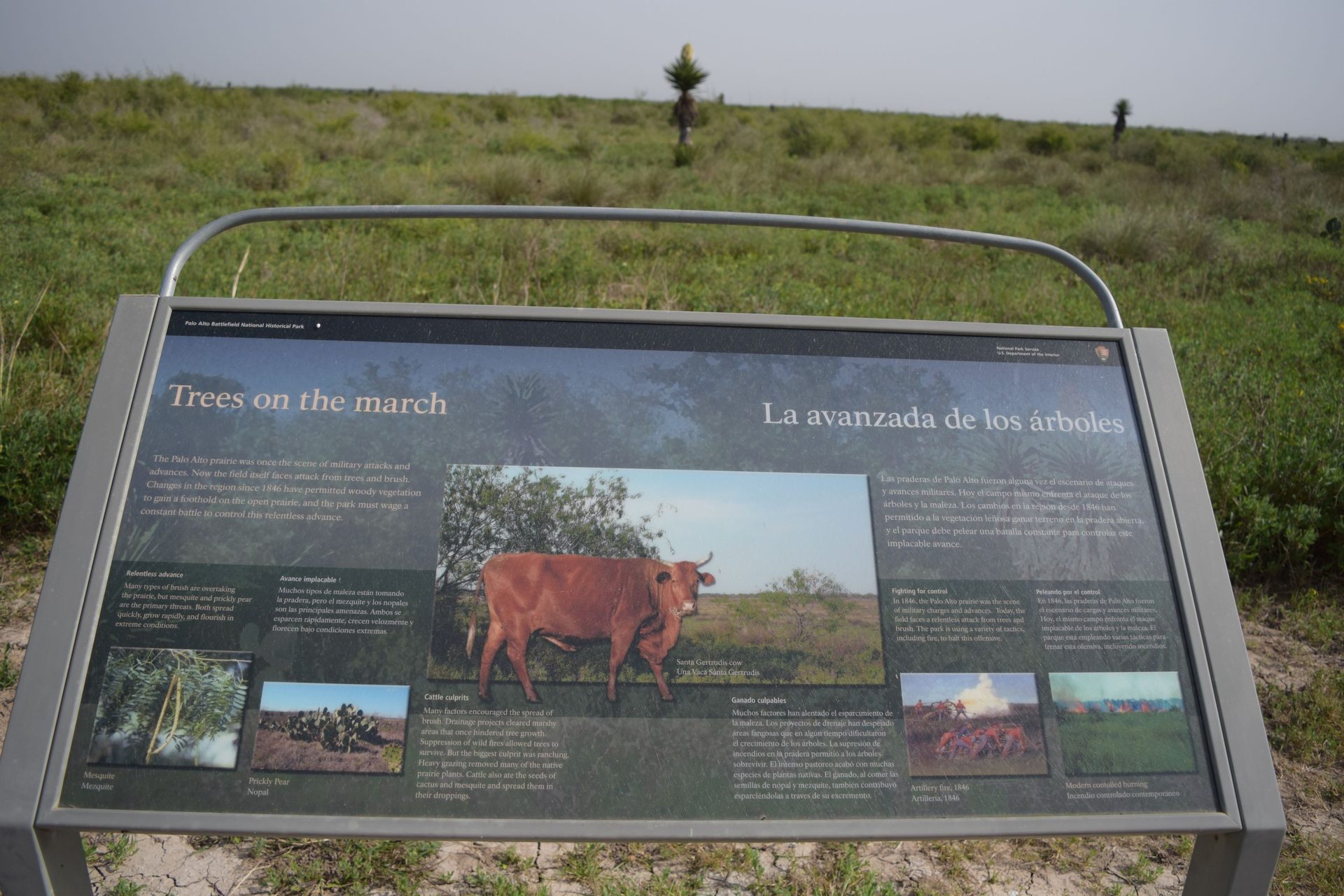
The Palo Alto prairie was once the scene of military attacks and advances. Now the field itself faces attack from trees and brush. Changes in the region since 1846 have permitted woody vegetation to gain a foothold on the open prairie, and the park must wage a constant battle to control this relentless advance
Sub Text
Relentless Advance
Many types of brush are overtaking the prairie, but mesquite and prickly pear are the primary threats. Both spread quickly, grow rapidly, and flourish in extreme conditions.
Cattle Culprits
Many factors encouraged the spread of brush. Drainage projects cleared marshy areas that once hindered tree growth. Suppression of wildfires allowed trees to survive. But the biggest culprit was ranching. Heavy grazing removed many of the native prairie plants. Cattle also ate the seeds of cactus and mesquite and spread them in their droppings.
Fighting for Control
In 1846, the Palo Alto Prairie was the scene of military charges and advances. Today, the field faces a relentless attack from trees and brush. The park is using a variety of tactics, including fire, to halt this offensive.
Image Descriptions
Background
Chaparral thicket
Bottom Left
Mesquite tree with seed pods.
Stand of prickly pear cactus.
Scissor-tailed flycatcher in flight.
Center
Santa Gertrudis cow and a view of the coastal prairie.
Bottom Right
Historical depiction of a US Army light artillery crew in action.
Scene of modern controlled burning of the coastal prairie.
From the National Park Service · nps.gov
Look inside
Getting there
Directions
At Palo Alto Battlefield National Historical Park
7200 Paredes Line Road, Brownsville, TX 78526
Go to Palo Alto Battlefield National Historical Park.
Get directions