
Invading Forces Wayside
About
Main Text
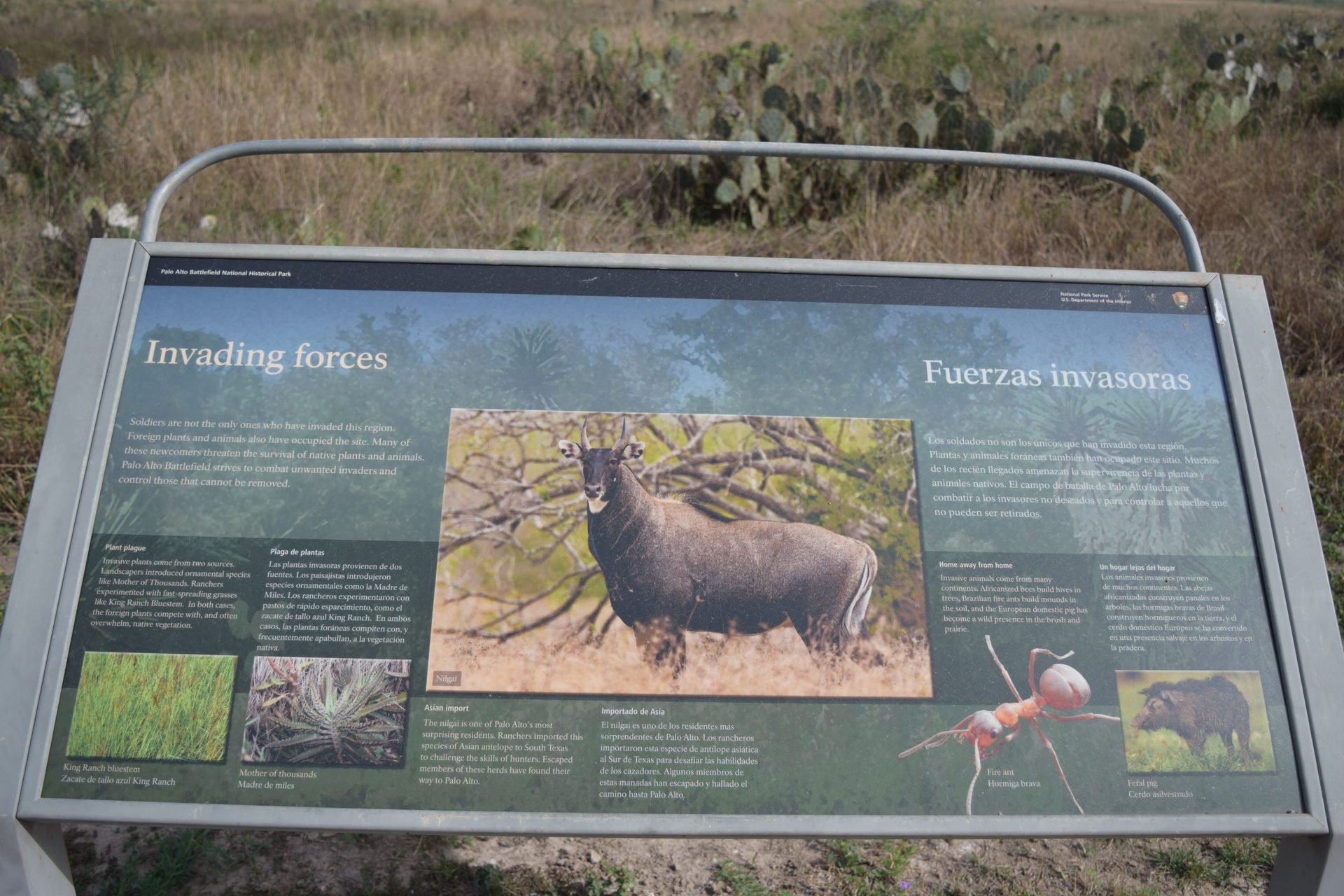
Soldiers are not the only ones who have invaded this region. Foreign plants and animals also have occupied the site. Many of these newcomers threaten the survival of native plants and animals. Palo Alto Battlefield strives to combat unwanted invaders and control those that cannot be removed.
Sub Text
Plant Plague
Invasive plants come from two sources. Landscapers introduced ornamental species like Mother of Thousands. Ranchers experimented with fast-spreading grasses like King Ranch Bluestem. In both cases, the foreign plants compete with, and often overwhelm, native vegetation.
Asian Import
The nilgai is one of Palo Alto’s most surprising residents. Ranchers imported this species of Asian antelope to South Texas to challenge the skills of hunters. Escaped member of these herds have found their way to Palo Alto.
Home Away From Home
Invasive animals come from many continents. Africanized bees build hives in trees, Brazilian fire ants build mounds in the soil, and the European domestic pig has become a while presence in the brush and prairie.
Image Descriptions
Background
Chaparral thicket
Center
Adult male nilgai antelope
Bottom Left
King Ranch bluestem grass
Mother of thousands plant
Bottom Right
Fire ant
Adult feral pig
From the National Park Service · nps.gov
Look inside
Getting there
Directions
At Palo Alto Battlefield National Historical Park
7200 Paredes Line Road, Brownsville, TX 78526
Go to Palo Alto Battlefield National Historical Park.
Get directions