
Air Power Wayside
About
Main Text
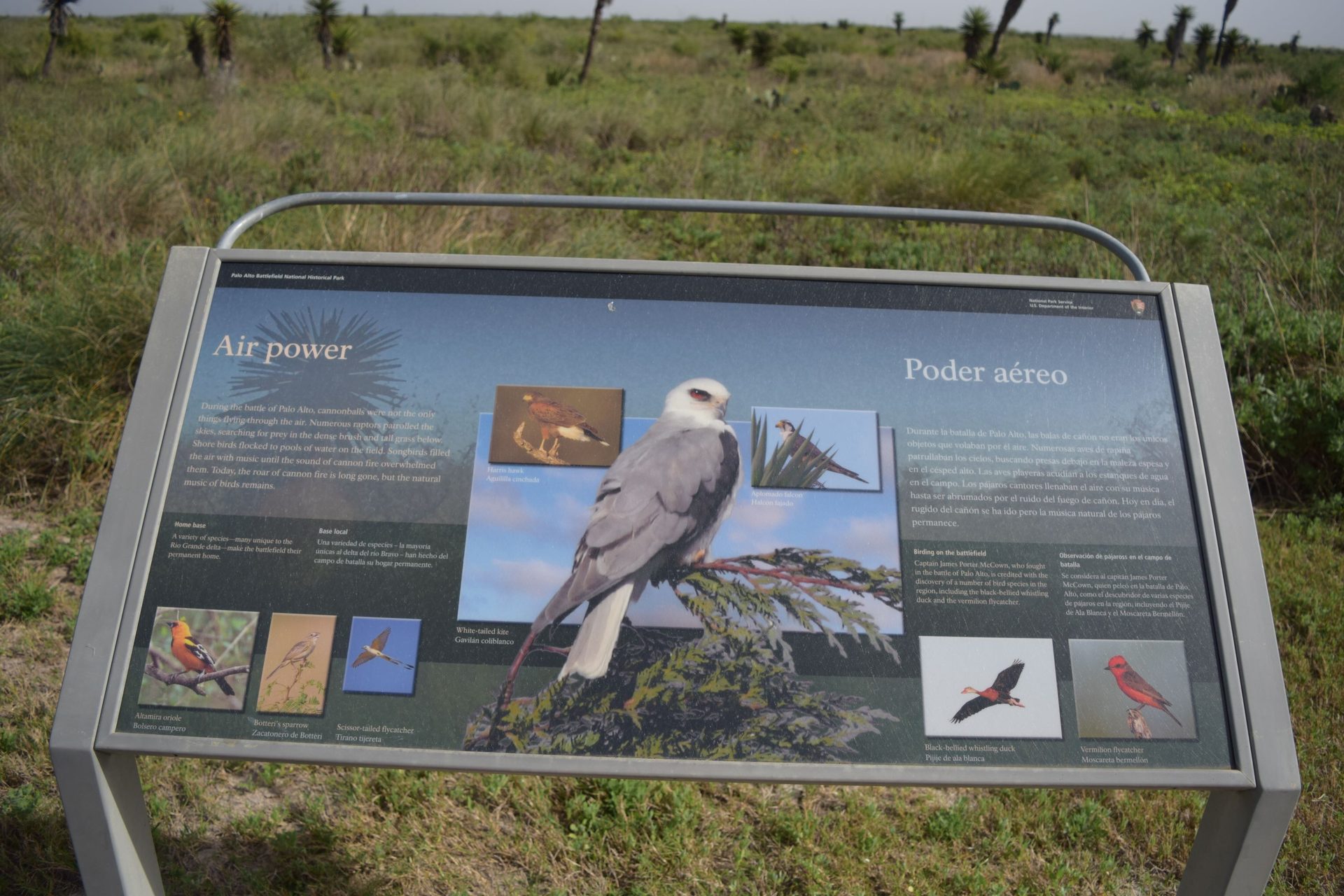
During the battle of Palo Alto, cannonballs were not the only things flying through the air. Numerous raptors patrolled the skies, searching for prey in the dense brush and tall grass below. Shore birds flocked to pools of water on the field, Songbirds filled the air with music until the sound of cannon fire overwhelmed them. Today, the roar of cannon fire is long gone, but the natural music of birds remains.
Sub Text
Home Base
A variety of species—many unique to the Rio Grande delta–make the battlefield their permanent home.
Birding on the Battlefield
Captain Hames Porter McCown, who fought in the battle of Palo Alto, is credited with the discovery of a number of bird species in the region, including the black-bellied whistling duck and the vermillion flycatcher.
Image descriptions
Background
Chaparral thicket
Bottom Left
Altamira oriole on branch.
Botteri’s sparrow on a branch.
Scissor-tailed flycatcher in flight.
Center
Harris hawk on a branch.
Aplomado falcon on a yucca.
White-tailed kite on a branch.
Bottom Right
Black-bellied whistling duck in flight.
Vermilion flycatcher on a branch.
From the National Park Service · nps.gov
Look inside
Getting there
Directions
At Palo Alto Battlefield National Historical Park
7200 Paredes Line Road, Brownsville, TX 78526
Go to Palo Alto Battlefield National Historical Park.
Get directions