
Wayside: Oreodont
Alerts
1 more for Badlands National Park
About
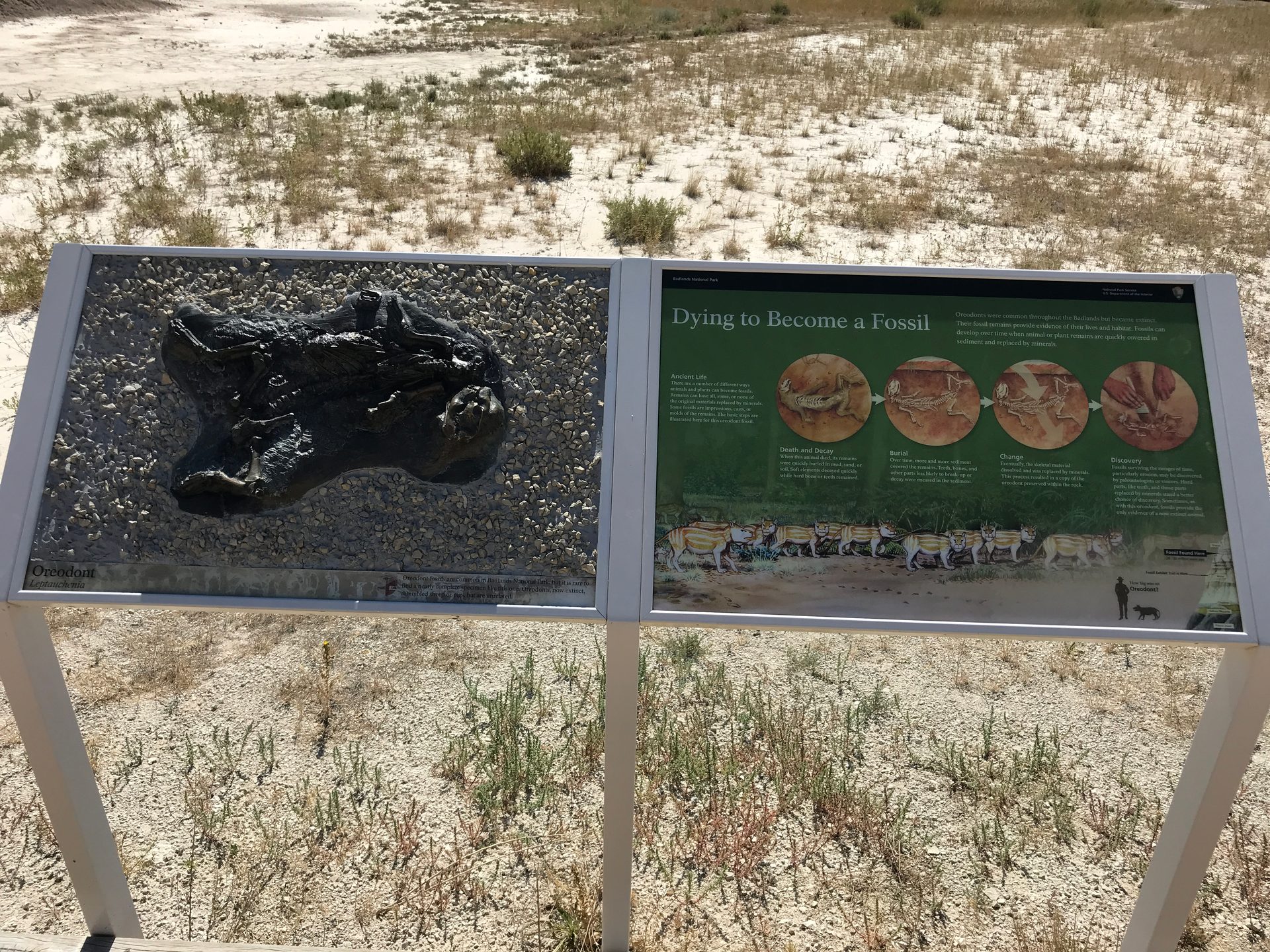
Dying to Become a Fossil
Oreodonts were common throughout the Badlands but became extinct. Their fossil remains provide evidence of their lives and habitat. Fossils can develop over time when animal or plant remains are quickly covered in sediment and replaced by minerals.
Ancient Life
There are a number of different ways animals and plants can become fossils. Remains can have all, some, or none of the original materials replaced by minerals. Some fossils are impressions, casts, or molds of the remains. The basic steps are illustrated here for this oreodont fossil.
Death and Decay
When this animal died, its remains were quickly buried in mud, sand, or soil. Soft elements decayed quickly while hard bone or teeth remained.
Burial
Over time, more and more sediment covered the remains. Teeth, bones, and other parts less likely to break-up or decay were encased in the sediment.
Change
Eventually, the skeletal material dissolved and was replaced by minerals. This process resulted in a copy of the oreodont preserved within the rock.
Discovery
Fossils surviving the ravages of time, particularly erosion, may be discovered by paleontologists or visitors. Hard parts, like teeth, and other parts replaced by minerals stand a better chance of discovery. Sometimes, as with this oreodont, fossils provide the only evidence of a non extinct animal.
From the National Park Service · nps.gov
Look inside
Getting there
Directions
25216 Ben Reifel Road, Interior, SD 57750
Go to Badlands National Park.
Get directions