
Stanford House
Alerts
5 more for Cuyahoga Valley National Park
About
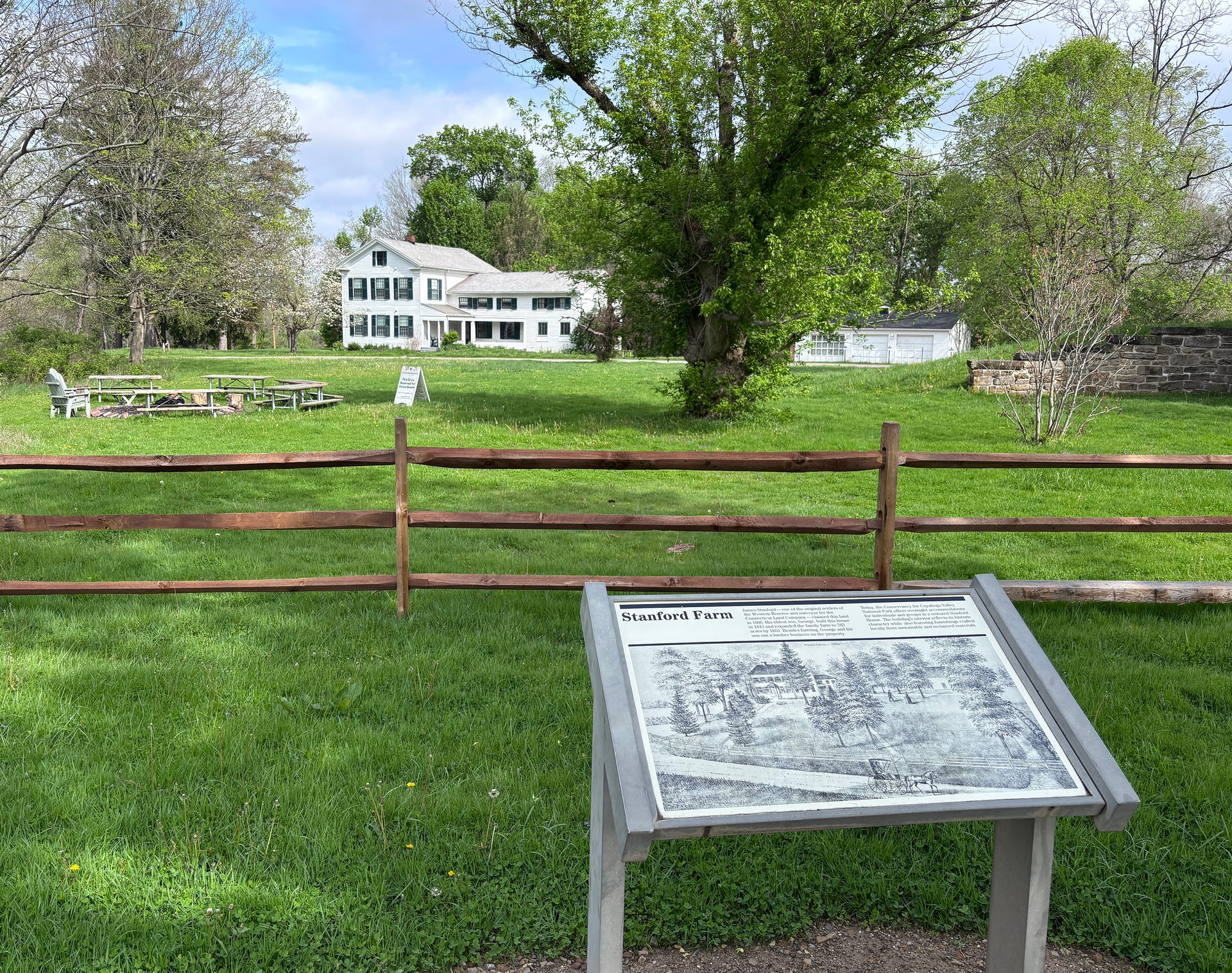
James Stanford – one of the original settlers of the Western Reserve and surveyor for the Connecticut Land Company – claimed this land in 1806. Legend tells us that he suggested the name of Boston when the village decided to incorporate. Sadly, he didn’t live to see Boston become a bustling canal town.
His oldest son, George C. Stanford, no doubt profited from the Ohio & Erie Canal Canal. He built this Greek Revival house in 1843 and expanded the family farm to 283 acres by 1853. Over time, the family had sheep, dairy cattle, orchards, and grain. Besides farming, George and his son ran a lumber business on the property. They were both also active in local politics, serving many positions in public office, including Justice of the Peace. After his father's death in 1883, George C. Stanford inherited the farm and continued to raise wheat, cattle, and sheep.
George C. Stanford's daughter Ellen eventually passed the farm along to her nephew, Ernest Dickenson. Rena Fiedler, lifelong valley resident, remembers growing up on her grandfather Ernest's farm. Play the audio clip below to hear Rena talk about life on the Stanford Farm in the 1930s.
The grounds of Stanford House have picnic tables for outdoor gatherings. The house is normally closed to the public, except for special programs. Across Stanford Road from the house, the Stanford Connector leads to the Ohio & Erie Canal Towpath Trail. A 0.4-mile trail heads around the pond and to Hines Hill Conference Center. To hike the Stanford Trail, start at the Stanford Trailhead at the end of Stanford Road. From here, the 1.5-mile trail continues behind the barn and leads to Brandywine Falls.
From the National Park Service · nps.gov
Look inside
Getting there
Directions
At Cuyahoga Valley National Park
6093 Stanford Road, Peninsula, OH 44264
Go to Cuyahoga Valley National Park.
Get directionsContact
Links
Nearby
Other places within a few minutes' walk of Stanford House.
Boston CemeteryHours not listed