
Eastern Woodland Habitat
About
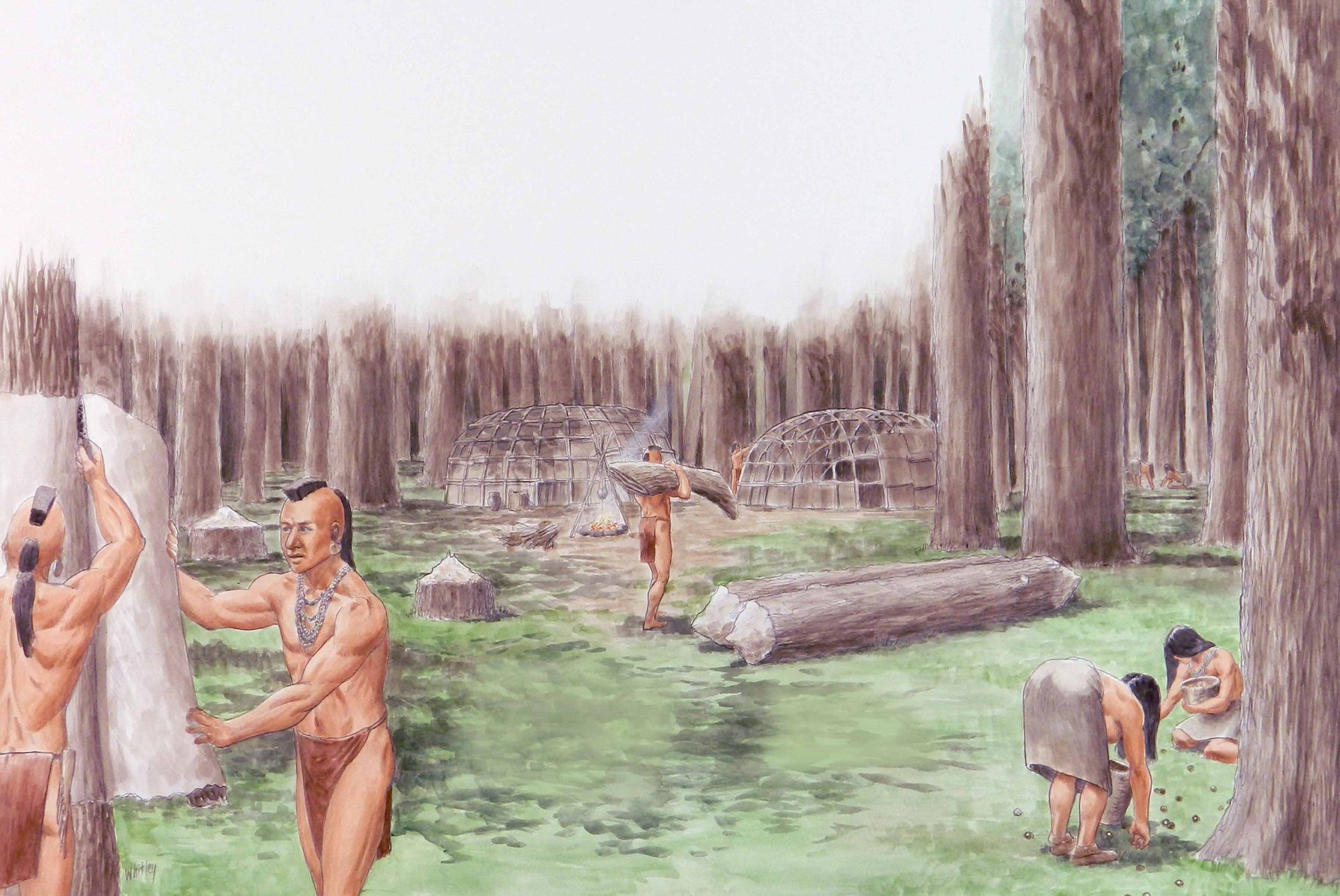
American Indian cultures in this area are deeply rooted in the woodlands of the Eastern Temperate Forest. Native people managed and cultivated the environment surrounding Ohio Hopewell earthworks using a deep body of traditional ecological knowledge. For thousands of years, people harvested hickory nuts, walnuts, hazelnuts, and acorns as staple foods. Fruits and berries including grapes, honey locust, hackberry, elderberry, and mulberry were plentiful in the bottomland forests. White-tailed deer was the most important animal food, followed by other small mammals, mussels, fish, turtles, and birds. Turkey, ducks, and geese were the most common birds eaten. Flint-tipped darts launched with a spearthrower ("atlatl") were the main hunting gear; the bow and arrow was not adopted until after the Hopewell episode. The earthwork builders were farmers as well: they grew crops including acorn and crookneck squashes, sunflowers, sumpweed, goosefoot, maygrass, little barley, erect knotweed, and tobacco. The earthwork builders lived their daily lives in small sedentary settlements dispersed around the ceremonial earthwork centers. Houses were covered with watertight bark harvested from the forest. People managed the forests using fire and tree girdling to increase nut and fruit production, and to improve habitat for game animals.
From the National Park Service · nps.gov
Look inside
Getting there
Directions
At Hopewell Culture National Historical Park
16062 State Route 104, Chillicothe, OH 45601
Go to Hopewell Culture National Historical Park.
Get directionsContact
Links
Nearby
Other places within a few minutes' walk of Eastern Woodland Habitat.
© OpenStreetMapHopeton Trench Newman's Insurance PlaceHours not listed