Mormon Handcart Replica
About
Please note that the Mormon handcart is placed in storage to protect it from the elements during the winter season.
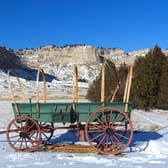
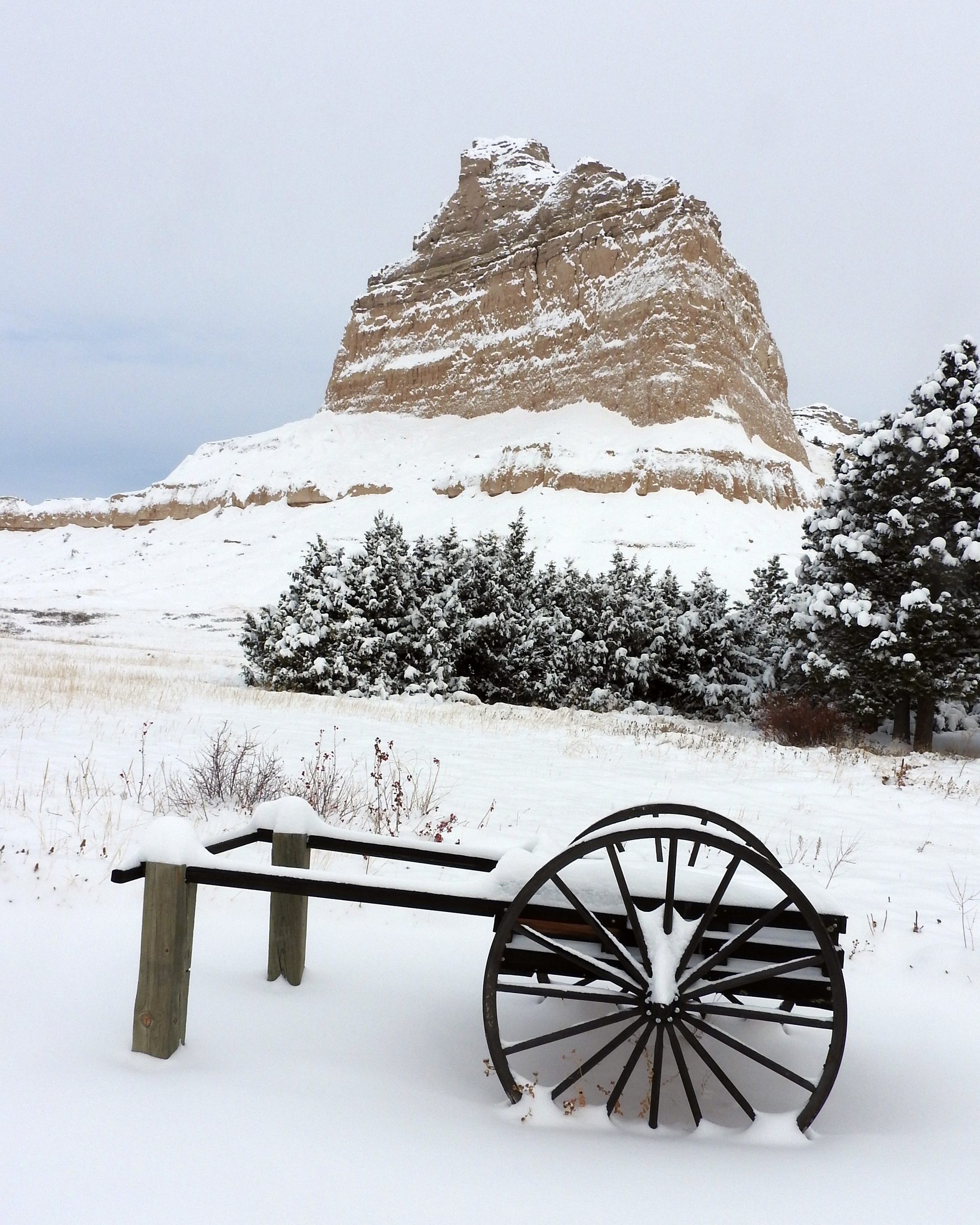
If one couldn’t afford a wagon, there was the option of a handcart. As the name implies it was not powered by an animal, but was pushed or pulled by the individual. The handcart was most likely based on carts used by street sweepers or luggage trolleys used by railroad porters. It was often seen as an economical means of bringing impoverished Mormon converts west to Salt Lake City.
A typical handcart was 3 feet wide by 4 feet long. It had a shallow box about 9 inches high. Wheels were 4 feet tall and could carry an approximate load of several hundred pounds. Most converts were limited to what they could carry because of weight restrictions set by the Mormon Church and the capacity of the handcart.
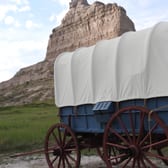
Across the front of the cart was a cross bar that allowed the cart to be pushed or pulled. Some carts also sported a canvas top resembling miniature covered wagons. Since carts were often made entirely of wood they were often noisy and subject to frequent breakdowns. During a four year period from 1856 to 1860, over ten different handcart companies aided approximately 3,000 Mormons to Salt Lake City.
This handcart was researched by Arnold Bateman and constructed by LeRoy Bateman.
From the National Park Service · nps.gov
Look inside
Getting there
Directions
At Mormon Pioneer National Historic Trail
Go to Mormon Pioneer National Historic Trail.
Get directionsContact
Links
Nearby
Other places within a few minutes' walk of Mormon Handcart Replica.