Gilman's Station
About
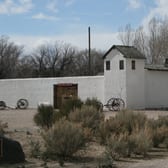
Gilman’s Station, 6 miles southeast of present-day Brady, Nebraska, played a key role in travel along the Oregon, California, and Pony Express trails across Nebraska—and it was one of a few stations to survive the 1864 Indian raids along the Platte and Little Blue rivers.
Brothers John and Jeremiah Gilman established the station in 1859 as a trading post for Native Americans and travelers on the Oregon-California Trail. By 1860, it also served as a stage stop for the Central Overland California & Pike’s Peak Express, the parent company of the Pony Express. From July 1 through November 20, 1861, Gilman’s operated as a Pony Express relay station, where riders changed horses, until the service ended. The following year, it became a swing station for Ben Holladay’s Overland Stage. At its peak, the busy station included 2 sod houses for the Gilman families, a store, a large corral, and stables for 275 horses.
Tensions with the Sioux, Cheyenne, and Arapaho escalated in the summer of 1864. After the US Army at Fort Cottonwood (later Fort McPherson) declined to provide protection, the Gilmans fortified their station with a cedar-post stockade around the houses, store, and water well. On the morning of August 9, 1864, a war party charged up during breakfast and drove off most of the livestock, although the raiders overlooked the valuable stage horses in the stable. As the Sioux headed east with their spoils, the Gilman families, employees, and guests quickly loaded a wagon and buggy with food and belongings and made the 13-mile dash northwest to Fort Cottonwood, arriving safely.
Jeremiah Gilman and 2 men stayed behind, intending to defend the stockade if the attackers returned. They soon did, hundreds of Sioux warriors who set fire to 2 freight wagons loaded with corn, encircled the compound, and threatened to overwhelm the defenders. From a rooftop, Jeremiah recognized one of the warriors and called to him in the Sioux language. The warrior acknowledged him as a friend, shouted to the others, and the entire war party abruptly withdrew down the valley. Though the station suffered significant economic losses, it survived intact.
As hostilities continued into 1865, the US Army built a substantial cavalry post at Gilman Station. Former employee John Y. Nelson described it as a circular, 12-foot-wide underground room connected by a tunnel to the stables, all enclosed within an “absolutely impregnable” stockade. About a dozen log houses served as soldiers’ quarters.
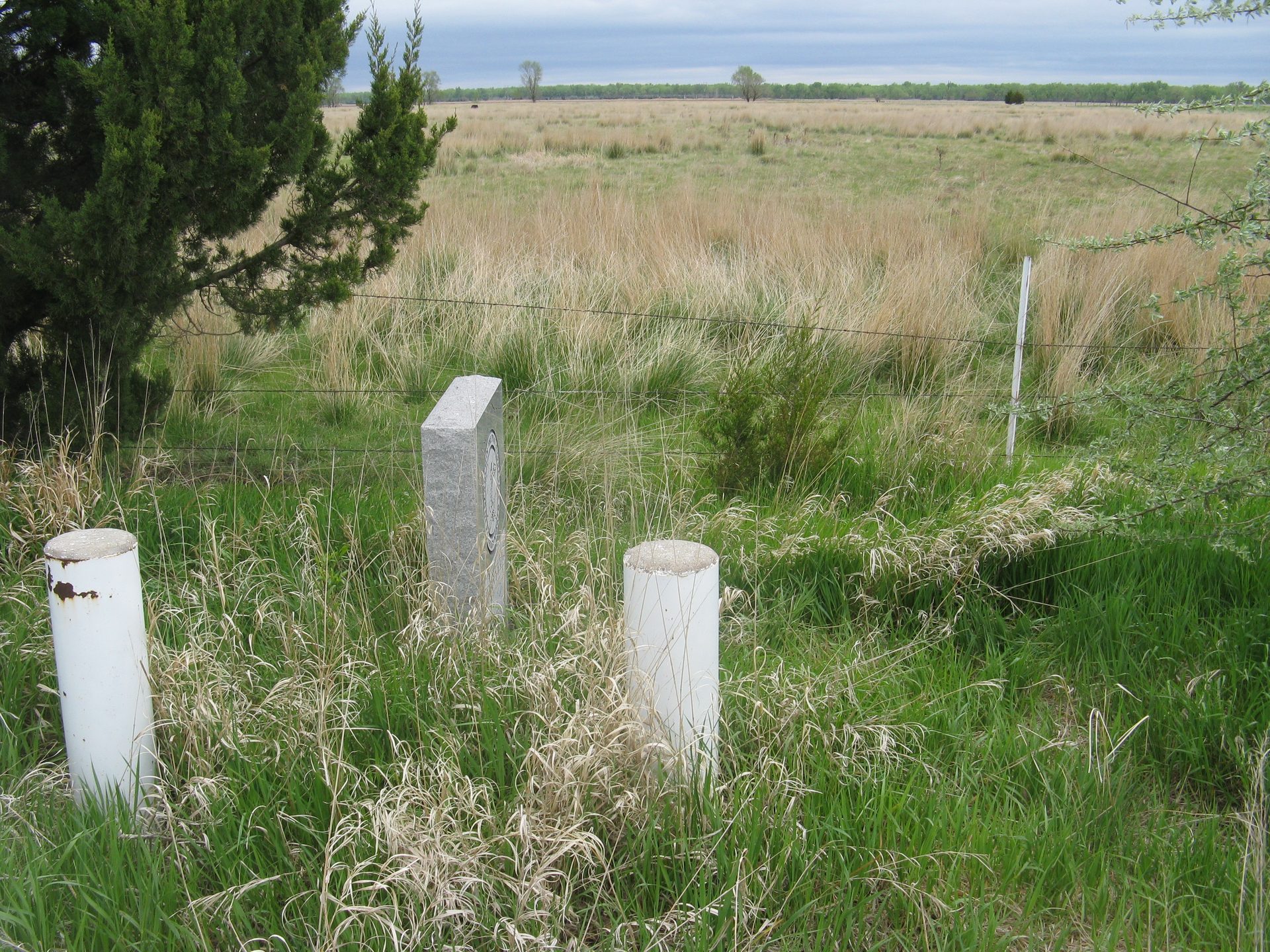
With trail traffic declining and the stagecoach operations shutting down due to construction of the transcontinental railroad, the Gilmans sold out in 1868. The army abandoned Fort Gilman in 1880, and the remaining buildings were sold at auction. Today, a roadside granite monument marks the site of this once-important location.
Site Information
Location (Marker is on the south side of the Platte River on north side of E Bailey Rd between Wilson Rd and S Mcpherson Rd. This location is about 6.5 miles southeast of the community of Brady, which is on the north side of the river. GPS roadside marker 40.9455 -100.2935)
Oregon National Historic Trail
From the National Park Service · nps.gov
Look inside
Getting there
Directions
At California National Historic Trail
Go to California National Historic Trail.
Get directionsFinding it
Marker is on the south side of the Platte River on north side of E Bailey Rd between Wilson Rd and S Mcpherson Rd. This location is about 6.5 miles southeast of the community of Brady, which is on the north side of the river. GPS roadside marker 40.9455 -100.2935
Contact
Links
Nearby
Other places within a few minutes' walk of Gilman's Station.