
Diamond Springs Station
About
A harrowing ride through an ambush in Telegraph Canyon ended at Diamond Springs Station for Pony Express rider George Scovell.
Scovell rode a sturdy Pony Express horse with a curious, question mark-shaped blaze on its face. He named the horse for its blaze, calling him “What?”
Near dusk on Oct. 19, 1860, amid ongoing conflict along the Pony Express and Overland Stage trail, Scovell and What? picked their way warily down Telegraph Canyon, in the Diamond Mountains, heading toward Diamond Springs.
“I remember well how uneasy he seemed to be, his ears working forward and backward, and I could feel him try to halt,” Scovell later wrote in his journal. The horse’s nervousness put him on edge.
Suddenly, a swarm of arrows zinged out of the trailside brush.
“I believe there were thirty or more [warriors],” Scovell recalled, “and they were right onto me . . . . Instantly I decided to make a run for the station and no pony on the line, I doubt, ever made faster time over the old trail than did that horse, even with arrows sticking form his side.”
With 11 arrows piercing his body, What? charged 3 miles down Telegraph Canyon carrying Scovell—who himself carried 2 arrows in his leg—to the safety of Diamond Springs Station. After delivering his rider, What? collapsed. Scovell sorrowfully ended the animal’s suffering with a shot to the forehead. Although dead livestock were typically left for coyotes, he buried What? beside the station and then quit his job. It was his final ride for the Pony Express.
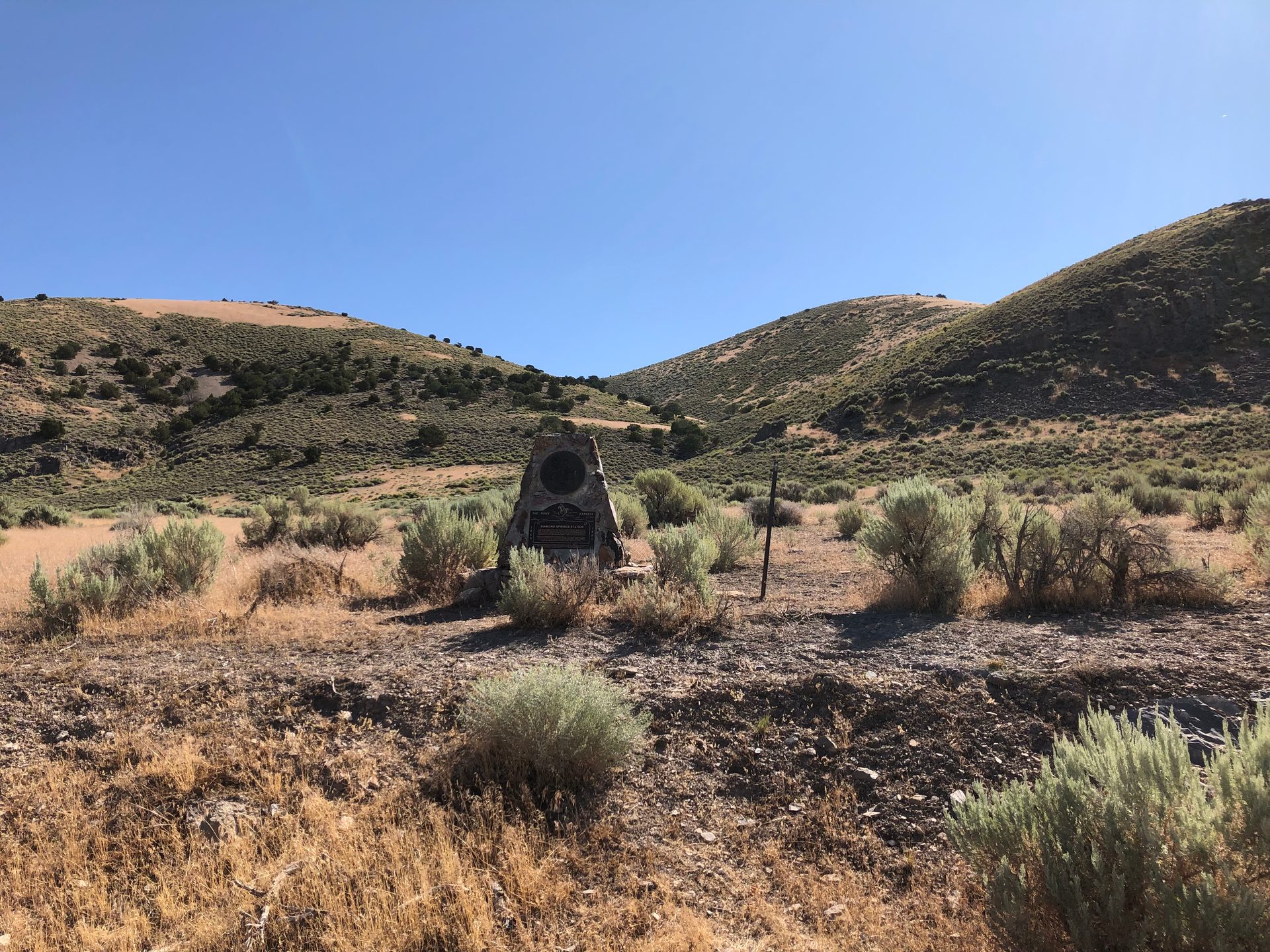
Scovell kept a photograph of the brave horse with his journal, now held by a descendant. Today, a monument near the station site commemorates both horse and rider.
The conflict in the area continued even after the Pony Express shut down in November 1861. Broken promises by an Indian agent to Paiute and Shoshone bands in the area fueled further tensions along the Overland Stage & Mail route. The agent had pledged to establish a reservation-farm at the springs, along with equipment and training, but the government failed to follow through. In a letter to friends, stationmaster Charles Hawley wrote that the Indian agent “ought to be hung for making promises to the natives and not fulfilling them: it is nothing more or less than signing the death warrant of the boys on the mail-line.”
To visit the site, head north from Eureka, Nevada, on US-50. At the north end of town, turn right (east) on Reno Ave, then immediately turn left (north) onto narrow, paved County Rd 101. Drive 11.5 miles and turn right (east) at the stop sign onto 9th St/County Rd 101. In 1 mile turn left, staying on pavement, to continue on County Rd 101. Drive north for 5.6 miles. The monument will be on the right. The mouth of Telegraph Canyon lies about 0.66 mile farther north of the monument.
Site Information
Location (Twenty-seven miles north of Eureka, Nevada, south of the intersection of Eureka-Thompsons and Telegraph Canyon Rds. GPS monument 39.9014166667, -115.8669166667 (The station site is in the ranch yard across the road).)
From the National Park Service · nps.gov
Look inside
Getting there
Directions
At Pony Express National Historic Trail
Go to Pony Express National Historic Trail.
Get directionsFinding it
Twenty-seven miles north of Eureka, Nevada, south of the intersection of Eureka-Thompsons and Telegraph Canyon Rds. GPS monument 39.9014166667, -115.8669166667 (The station site is in the ranch yard across the road).