
NeCus' Park
About
Near the old Cannon Beach Elementary School in Cannon Beach, Oregon, lies Necus’ Park. This small public park was once the site of a prosperous native village, known as NeCus’ to the local tribes, prior to colonization.
It was here, in January 1806, that William Clark and a few members of the Lewis and Clark Expedition, while searching for a 105-foot beached whale, met with members of the local tribes from whom they bought whale oil and blubber. Expedition member Hugh McNeal also nearly met his end here because of a plot to steal his clothes and blanket by a man visiting from a distant village. McNeal was saved by a Tillamook woman who, upon realizing she couldn’t stop him from going with the man, alerted the other men of the village to the danger.
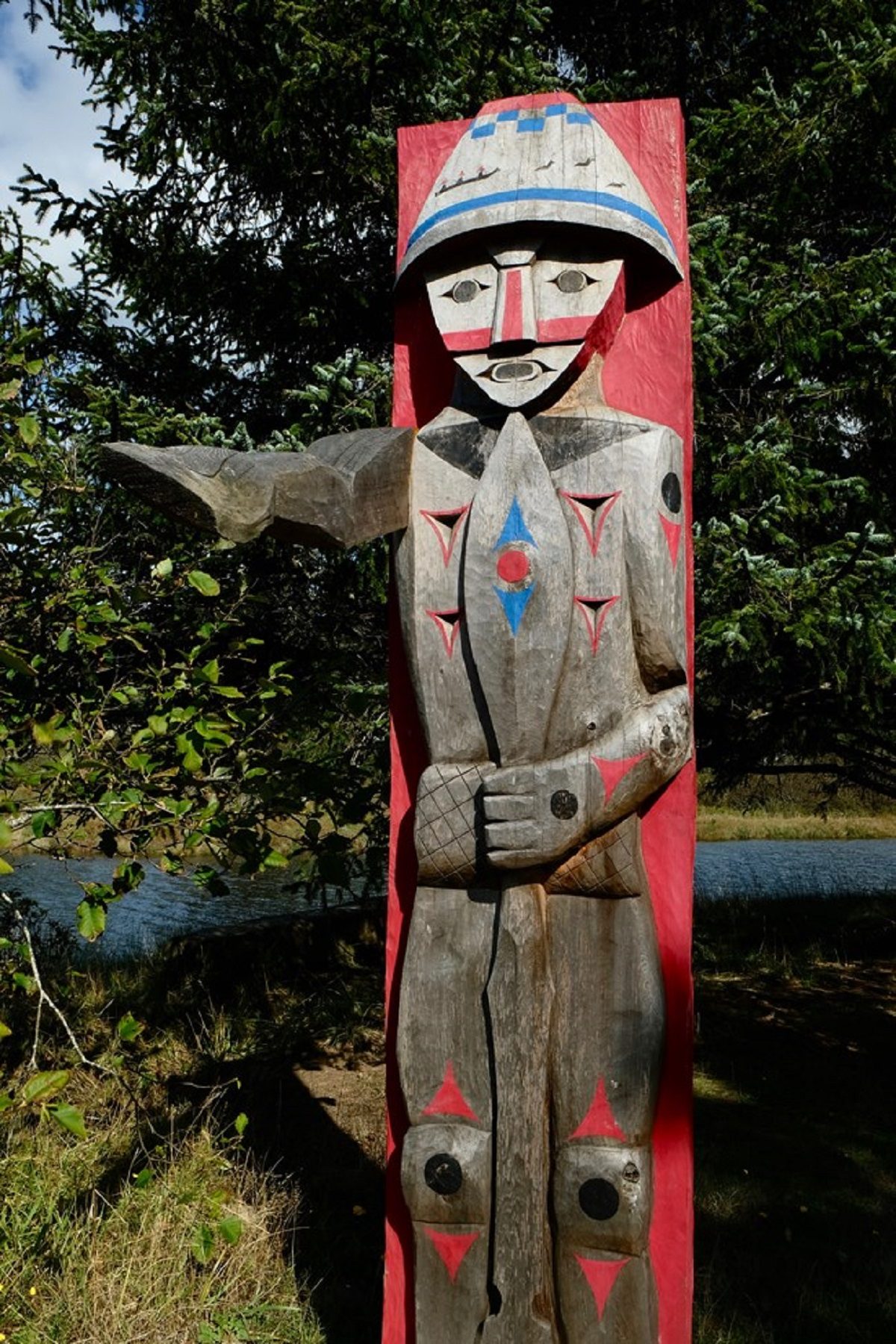
Today, Necus’ Park is incredibly important to the Clatsop-Nehalem Confederated Tribes. In 2016, a 10-foot cedar statue of a young Clatsop man, called a welcoming pole, was erected along the bank of Ecola Creek at the park’s edge. Carved by native artist, Guy Capoeman, the welcoming pole commemorates a time, prior to the arrival of Europeans, when the tribes traveling to the Columbia River or Nehalem Bay would visit one another and attend celebrations and potlatches (gift-giving events to celebrate friendship between members).
The statue is one of the highlights on the Cannon Beach Public Art Walking Tour, a 1.5-mile self-guided tour through the city. For more information on the walking tour, visit Public Art Walking Tour | Cannon Beach, Oregon.
From the National Park Service · nps.gov
Look inside
Getting there
Directions
At Lewis & Clark National Historic Trail
601 Riverfront Dr., Omaha, NE 68102
Go to Lewis & Clark National Historic Trail.
Get directionsContact
Links
Nearby
Other places within a few minutes' walk of NeCus' Park.
Public Coast Brewing CoHours not listed Duane Johnson Real EstateHours not listed The Retreat at Cannon BeachHours not listed