
Mississippi/Missouri Confluence
About
“Water is the blood of life.”—John Thomas, Kickapoo, ca. 2006135
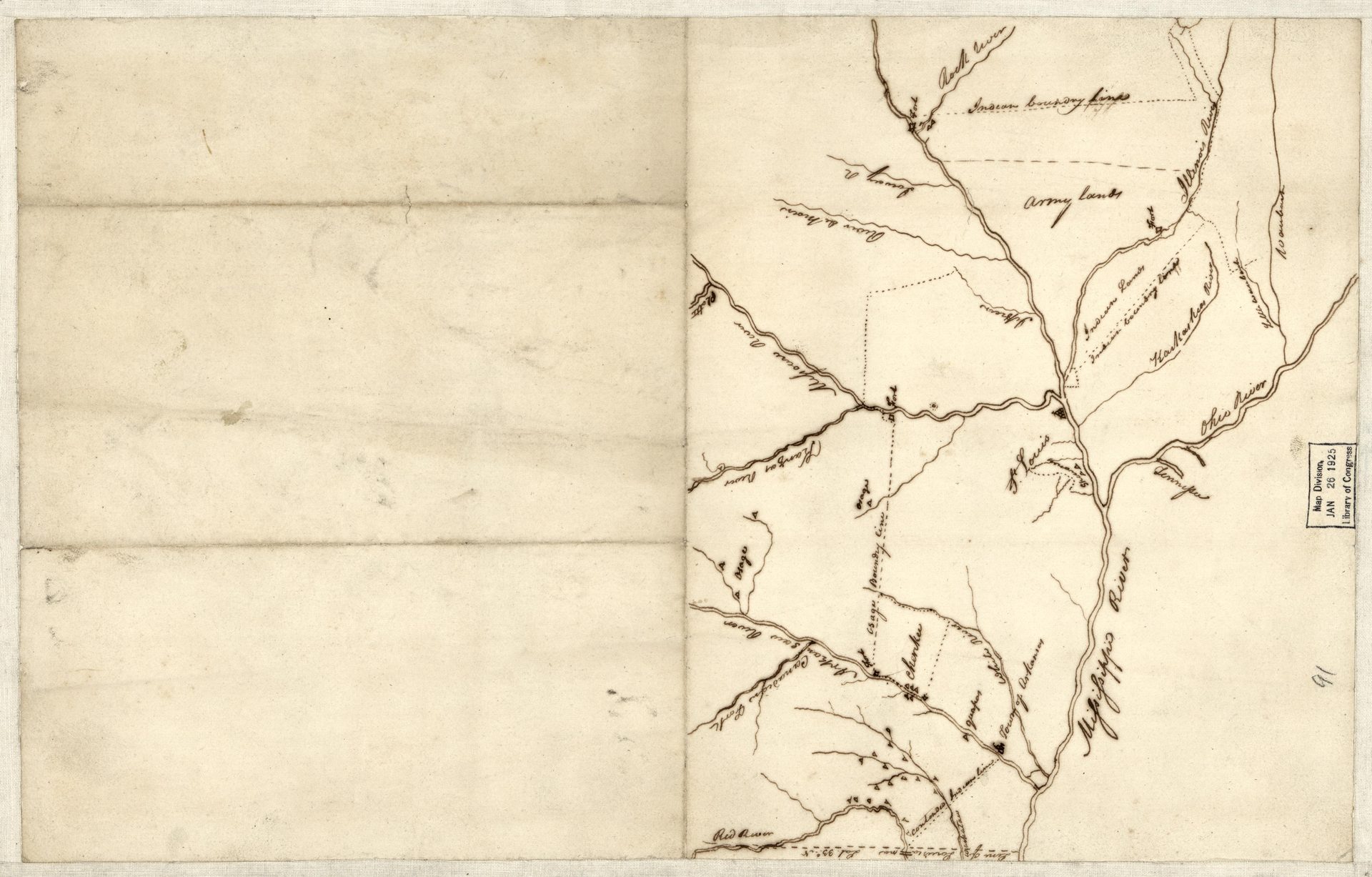
Humans have always known the power of water. Since time immemorial, the Mississippi and Missouri Rivers have been sources of water for communities living along its banks. Indigenous families planted crops of corn, beans, and squash along the rivers. They relied on the regular flooding to both water the crops and provide nutrients to the soil. The land along the Mississippi was fertile enough to support the growth of large cities like Cahokia.
Located near the confluence of two great rivers, Cahokia was a hub for trade and transportation. During its golden age between 1000 and 1350 CE, the population of Cahokia may have reached as many as 20,000 people. People from the Northern Great Plains used canoes and bison-skin boats to travel to this trading center.
The Spanish traveled up the Mississippi River in the 1500s. The French came a century later, followed by the British. Throughout this period, European traders and trappers used the same water routes that Indigenous travelers had utilized for millennia.
European powers fought over control of this river.To them, mastery of the river also meant dominion over the surrounding lands.
European settlers brought with them enslaved people of African descent. Black men worked on the trading vessels that traveled between towns on the Mississippi. The river could also be a source of freedom: many of those enslaved used the river and its thickly vegetated banks as a means of escape.
When Meriwether Lewis and William Clark arrived at the confluence of the Missouri and Mississippi Rivers on a colonial mission in 1803, they entered a long tradition of people traveling the two rivers.
About this article: This article is part of series called “Pivotal Places: Stories from the Lewis and Clark National Historic Trail.”
From the National Park Service · nps.gov
Look inside
Getting there
Directions
At Lewis & Clark National Historic Trail
435 Confluence Tower Dr, Omaha, NE 62048
Go to Lewis & Clark National Historic Trail.
Get directionsContact
Links
Nearby
Other places within a few minutes' walk of Mississippi/Missouri Confluence.
Colman's Country CampersHours not listed