
Stop 8: Vertebrate Tracks
About
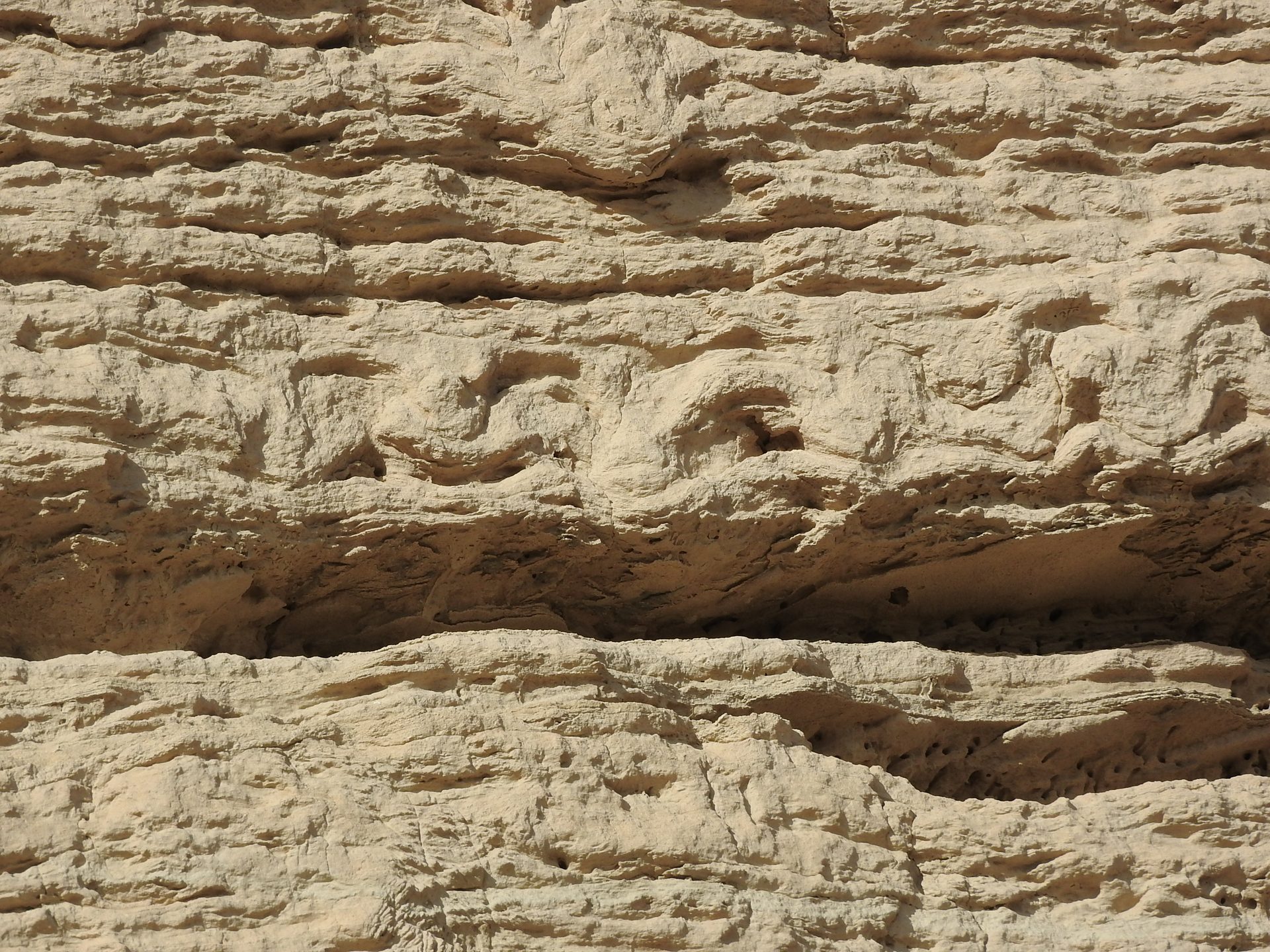
Sixty-five feet before reaching the east entrance of the foot tunnel look to the cliff face just off of the trail. A distinct layer of volcanic ash can be seen about 6 feet above the level of the trail. Two feet above the top of the ash layer, concave-up deformation structures can be seen. Geologists believe these structures were created as vertebrates walked through the sediment here. The scale and two-lobed shape of the deformations leads scientists to believe that these are the tracks of large ungulates, possibly entelodonts (the Dinohyus or Daeodons found at Agate Fossil Beds National Monument are examples of entelodonts). Other potential track-makers include oreodonts, hyracodontid rhinos, tapirs, small horses, camels, and a variety of carnivores. Once again, we see an example of how living things have left their mark on the geology of Scotts Bluff.
To get to the next stop on the tour, head through the tunnel and down the trail to the switchback. As you make your way there, be on the lookout for a distinct change in rock layers.
From the National Park Service · nps.gov
Look inside
Getting there
Directions
At Scotts Bluff National Monument
190276 Old Oregon Trail, Gering, NE 69341
Go to Scotts Bluff National Monument.
Get directions