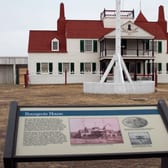
Trade House - Reception Room & Trade Room
About
The Trade House consisted of two rooms, with the Reception Room being the most important one. This is where the leaders of the Tribes would meet with the Traders from the American Fur Company to negotiate the terms of their trade. The room itself was minimalist, with only one bench for sitting, but adorned with curios from both cultures.
When a band from the Upper Missouri Tribes arrived to trade, they were greeted in the Reception Room by the trader, one or two laborers, and an interpreter if needed. A fire was lit in the fireplace, and food and drinks were served. After the meal, pipes were passed around, and the trader made a speech emphasizing friendship and peace. The tribal leader then spoke, repeating many of the same things the trader had said, and described how his people had survived the winter and any recent hardships. Gifts were exchanged, with the trader giving the chief items like black powder, coffee, sugar, tobacco, or even a musket, while the tribal leader might present the trader with a bow and arrows in a skin quiver, a rawhide storage bag, or a beaded and quilled pipe bag. Once the gifts had been exchanged, the two men began to negotiate the trade. The tribal leader spread out a buffalo robe and other furs for the trader to examine, and the trader carefully inspected them while the tribal leader and his men talked about how they had obtained them. After this, the trader retrieved some of the newest items from the Trade Shop, and both parties examined each other's wares before serious negotiations began. This initial trade was pivotal to each negotiator. For the tribal leader, he is setting the price his people will expect for their robes this year. The better price he can set the more value their robes are worth. For the trader, he is negotiating the fort's profits for the year but he must not undervalue the robes. If he gives too poor of a trade value the tribe may not come back net year as there are competition forts up and down the Missouri River and just north of the site in Canada all vying for the same furs. The price for each robe would be set in trade good, not cash value as cash had no meaning on the upper Missouri. When the negotiations were concluded, the trade began. The tribal leader will inform his people what the trade is for this season, and then all persons in the band would trade individually for items they needed based on the price set by their tribal leader. If the price was set as, for example, a knife, tin pot and yard of cloth, not everyone in the band would need those exact items, but they would understand the relative worth of them and be able to use that worth to negotiate for items they did desire. In this way, over 25,000 to 50,000 buffalo robes were slowly and methodically traded each year at Fort Union. Men and women would divide the hides in their families and trade for what they each needed. The band then visited old friends and family in the fort, feasted, and relaxed. After a week or so, the entire band, having acquired all they needed or wanted, broke camp one morning and moved on through the breaks. After a few parting salutations, the band disappeared until the following year.
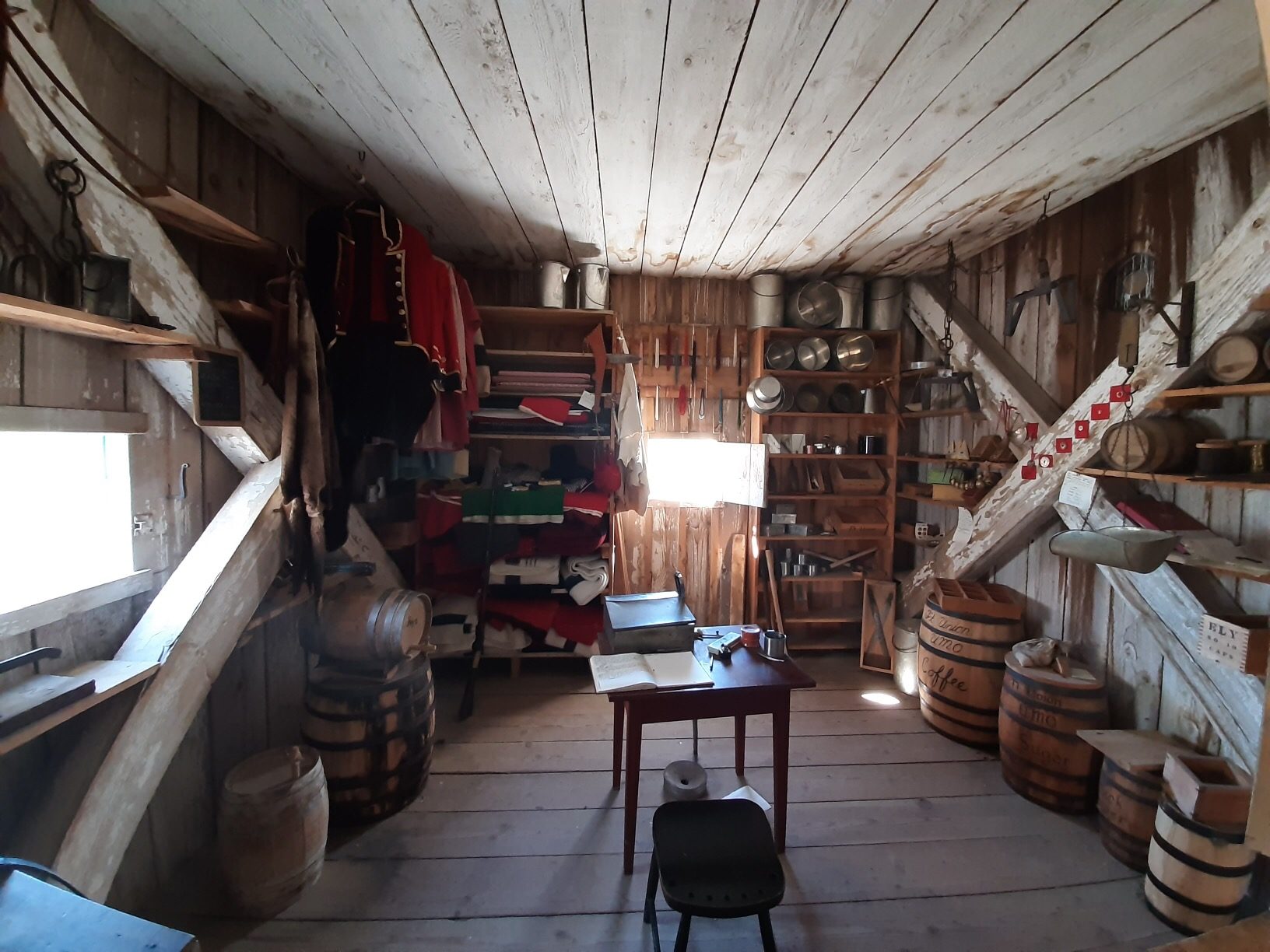
The Trade Shop was a showroom that stocked over 200 different items. These items could be categorized as either laborsaving or ornamental. Laborsaving items were those that were manufactured, such as fabric, metal knives, and copper or tin cook pots. These items were durable, long-lasting, and helped save labor by eliminating the need to hunt, butcher, and tan an animal hide to make clothing or cooking utensils. Ornamental items, on the other hand, were purchased for their decorative value, such as silverwork ear wheels, ear bobs, and brooches, glass beads, fabrics, vermillion mineral pigment, brass tacks, and small tin and copper tinklers (cones). Some of these items were made on-site, with blacksmiths and tinsmiths employed to create tin and metal work, including arrowheads and spearpoints. The Fort Tailors made ready-made shirts and elaborate jackets called "Chiefs Coats", which were one of the most expensive items traded in the Trade House. However, most of the manufactured items were imported from overseas, including fabric from France, beads from Italy, woolen blankets from England, and guns from Belgium.
Learn more:
Watch an interpretive trade house talk.
From the National Park Service · nps.gov
Look inside
Getting there
Directions
At Fort Union Trading Post National Historic Site
15550 Highway 1804, Williston, ND 58801
Go to Fort Union Trading Post National Historic Site.
Get directionsContact
Links
Nearby
Other places within a few minutes' walk of Trade House - Reception Room & Trade Room.