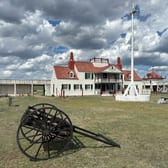
The Bourgeois House
About
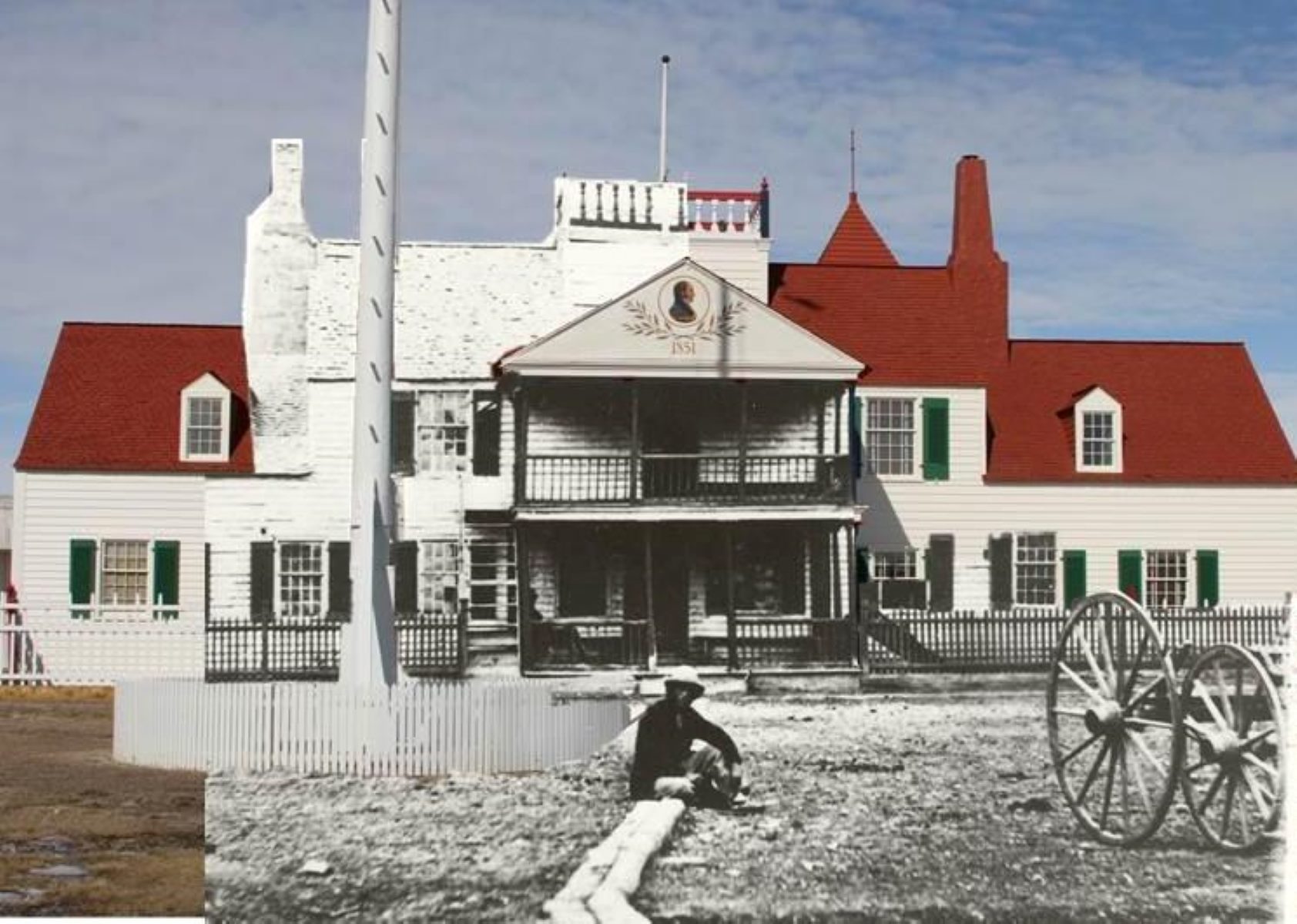
The Bourgeois House was originally designed as a simple French Colonial structure, named after the fort's Bourgeois or site manager. According to Bourgeois Edwin Denig's 1843 account, the house was 78 feet wide, 24 feet deep and had a story and a half. Denig also mentioned that the front porch added both comfort and appeal. In 1850, the American Fur Company expanded the house into a classical revival building with a two-story porch and a full second floor.
The Bourgeois at Fort Union was responsible for managing the trading post and serving as the primary agent of the American Fur Company. It was a highly prestigious and powerful position due to the significance of Fort Union as the most important trading post on the upper Missouri River for almost four decades. The Bourgeois had a range of responsibilities, including managing trading post operations, hiring workers and contractors, procuring trade goods and provisions, managing finances, establishing friendly relationships with area Upper Missouri tribes, maintaining order within the post, hosting important visitors, managing smaller trading posts upriver from Fort Union, observing and scouting trading posts of competing companies, and serving as a liaison to the American Fur Company offices in Saint Louis. The Bourgeois received a fixed salary of $1,200 to $1,500 per year plus a percentage of the post's profits. Additionally, the Bourgeois House provided comfortable living accommodations and a household staff that included rooms, offices, and a large dining room for management staff meals. As well, as the Bourgeois' intermarried into the Upper Missouri tribes, the Bourgeois House was also a family home.
One woman who lived in the Bourgeois House was Natawista Iksina, a member of the Blood band of the Blackfoot Nation. At the fort, it was common for the managers or engagés to marry an American Indian woman. The partnership of a Euro-American man and an Indian woman gave the woman a number of advantages that were social, economic, and political. Additionally, an Indian and Euro-American partnership helped to ensure positive trade and social relations with the wife’s people and the fur traders. As a result, Natawista was one of many Indian women who married a Euro-American man at Fort Union. She and Culbertson married around 1840, when she was 15 and he was 30. Thereafter, she was a powerful woman and a diplomat between the Blackfoot and the Euro-American traders who helped to create strong relationships between the two.
Today, the reconstructed Bourgeois House serves as the park's Visitor Center, exhibit center, bookstore, resource library, archives, and administrative offices.
From the National Park Service · nps.gov
Also here
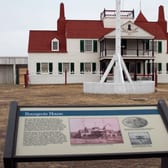
Look inside
Getting there
Directions
At Fort Union Trading Post National Historic Site
15550 Highway 1804, Williston, ND 58801
Go to Fort Union Trading Post National Historic Site.
Get directionsContact
Links
Nearby
Other places within a few minutes' walk of The Bourgeois House.