
Corn Crib
About
Although the corn crib's design over time has varied greatly, the overall function is like what was first created by the American Indians as a means of storing and drying corn.
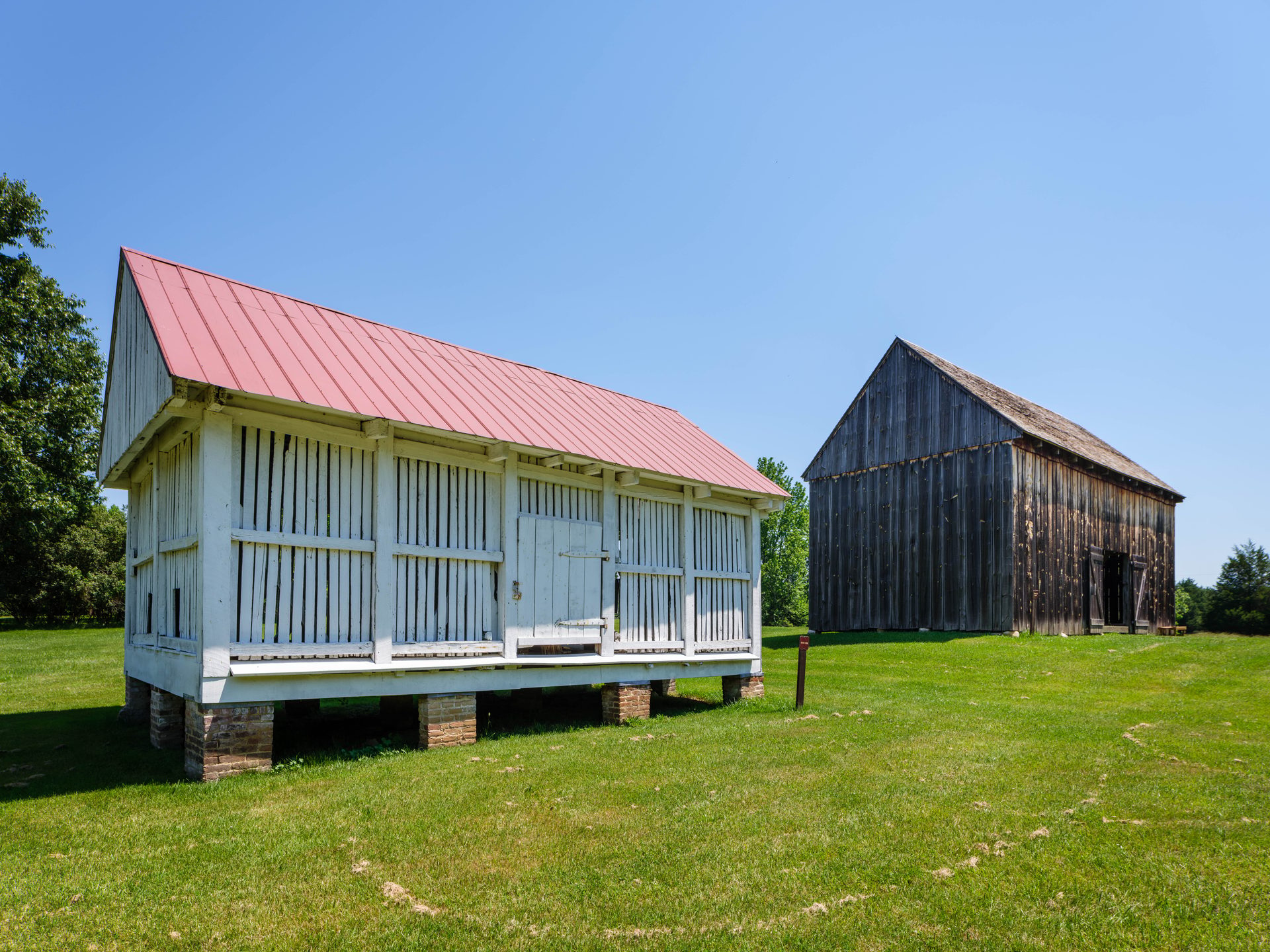
The Corn Crib at Thomas Stone National Historic Site is located on a small hill with only a few other buildings nearby to ensure there is good circulation of air around it. The walls, both interior and exterior, are made of wooden slats to aid in the air flow.
To deter rats, field mice, and other animals from accessing the corn, the Corn Crib is raised above ground on brick columns that are strategically placed to support the frame. In addition, its elevated height prevents corn from drawing any moisture found in the soil.
The interior of this Corn Crib has a central passage. This could serve as a workspace, such as for shelling corn. The passage also provided extra air flow for the two narrow chambers at each end of the Corn Crib.
It is very important that each chamber is small. Corn that is buried too deep is susceptible to rot if there is not enough air flow for it to dry.
From the National Park Service · nps.gov
Look inside
Getting there
Directions
At Thomas Stone National Historic Site
6655 Rose Hill Road, Port Tobacco, MD 20677
Go to Thomas Stone National Historic Site.
Get directions