
Blast Furnace
About
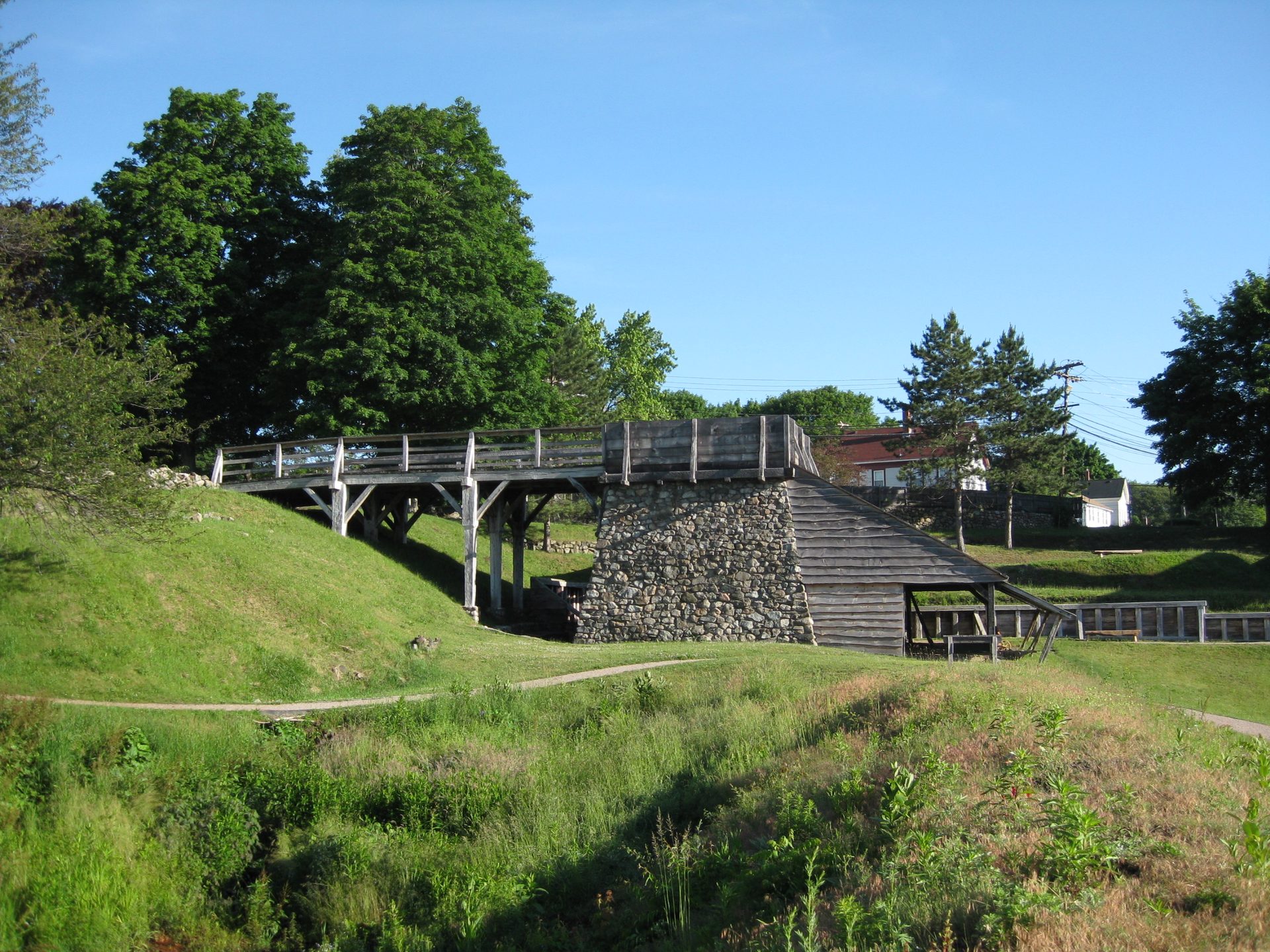
In 1646, the original blast furnace roared to life, lit with a 3000 degree fire that was kept burning 24 hours a day for months at a time. The blast furnace is where bog ore was smelted to create cast iron "pig" bars. To do this, three types of raw materials were brought over the charging bridge and loaded into the chimney of the furnace.
Bog ore is an iron-rich rock that was harvested locally from bogs and similar bodies of water. It was also found in fields and meadows that used to be bogs. Bog ore is often considerably less than 50% iron. The rest of the rock was made up of impurities that the workers had to remove.
Charcoal was needed to fuel a fire that would burn hot enough to smelt the ore. Charcoal production was very labor intensive and required the work of many woodcutters, carters, and colliers who oversaw the conversion of seasoned wood into charcoal.
Gabbro was used as a flux; a way to purify the ore. When gabbro was melted with bog ore, the impurities in the ore latched onto elements in the gabbro. All of those impurities floated to the surface while the dense iron sunk to the bottom, creating a separation of good iron from the waste.
From the National Park Service · nps.gov
Look inside
Getting there
Directions
At Saugus Iron Works National Historic Site
244 Central St, Saugus, MA 01906
Go to Saugus Iron Works National Historic Site.
Get directionsContact
Links
Nearby
Other places within a few minutes' walk of Blast Furnace.
MD Building ServicesHours not listed Big Fish ScreenprintHours not listed Peter's PizzaHours not listed