Hospital Garden
About
As the military opened frontier forts further west, supplying the army became increasingly difficult. The War Department understood the need for vegetables in the soldiers' diets, but unable to fill this need, they eventually tasked the soldiers with growing their own gardens to supplement their rations. Here at Fort Scott, Sergeant John Hamilton, who came to the fort's future site before the first garrison to set up temporary accommodations, planted the initial gardens. Each company had a small plot for their own use, as did the hospital and the individual officers. Plants known to be grown at Fort Scott include: cabbages, carrots, eggplants, muskmelons, onions, peaches, peas, Irish potatoes, sweet potatoes, pumpkins, radishes, and turnips. Other plants, such as cucumbers and mustard, may have been cultivated, but there is no direct evidence.
Today Fort Scott NHS cultivates two gardens with historically accurate vegetation. These gardens are in place to help visitors visualize the soldiers' daily lives at the fort and are maintained, in large part, by our Volunteers-in-Park. One is this hospital garden in front of the fort. The other can be found behind Officers' Quarters Number 2.
-Information from Shelby Spears essay
From the National Park Service · nps.gov
Getting there
Directions
At Fort Scott National Historic Site
1 Old Fort Blvd., Fort Scott, KS 66701
Go to Fort Scott National Historic Site.
Get directionsContact
Links
Nearby
Other places within a few minutes' walk of Hospital Garden.
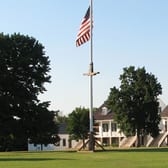 Flag Pole
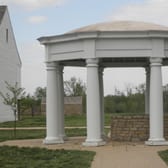 Well and Canopy
Bam-Bam Brewing Co.Hours not listed