
Haʻakulamanu (Sulphur Banks)
Kīlauea eruption. Volcanic eruptions can be hazardous. Stay out of closed areas and monitor air quality. Eruptions can last a few hours and are often separated by pauses lasting several weeks. nps.gov
Alerts
- DangerKīlauea eruptionVolcanic eruptions can be hazardous. Stay out of closed areas and monitor air quality. Eruptions can last a few hours and are often separated by pauses lasting several weeks. Posted November 2 · From Hawaiʻi Volcanoes National Park · nps.gov
5 more for Hawaiʻi Volcanoes National Park
About
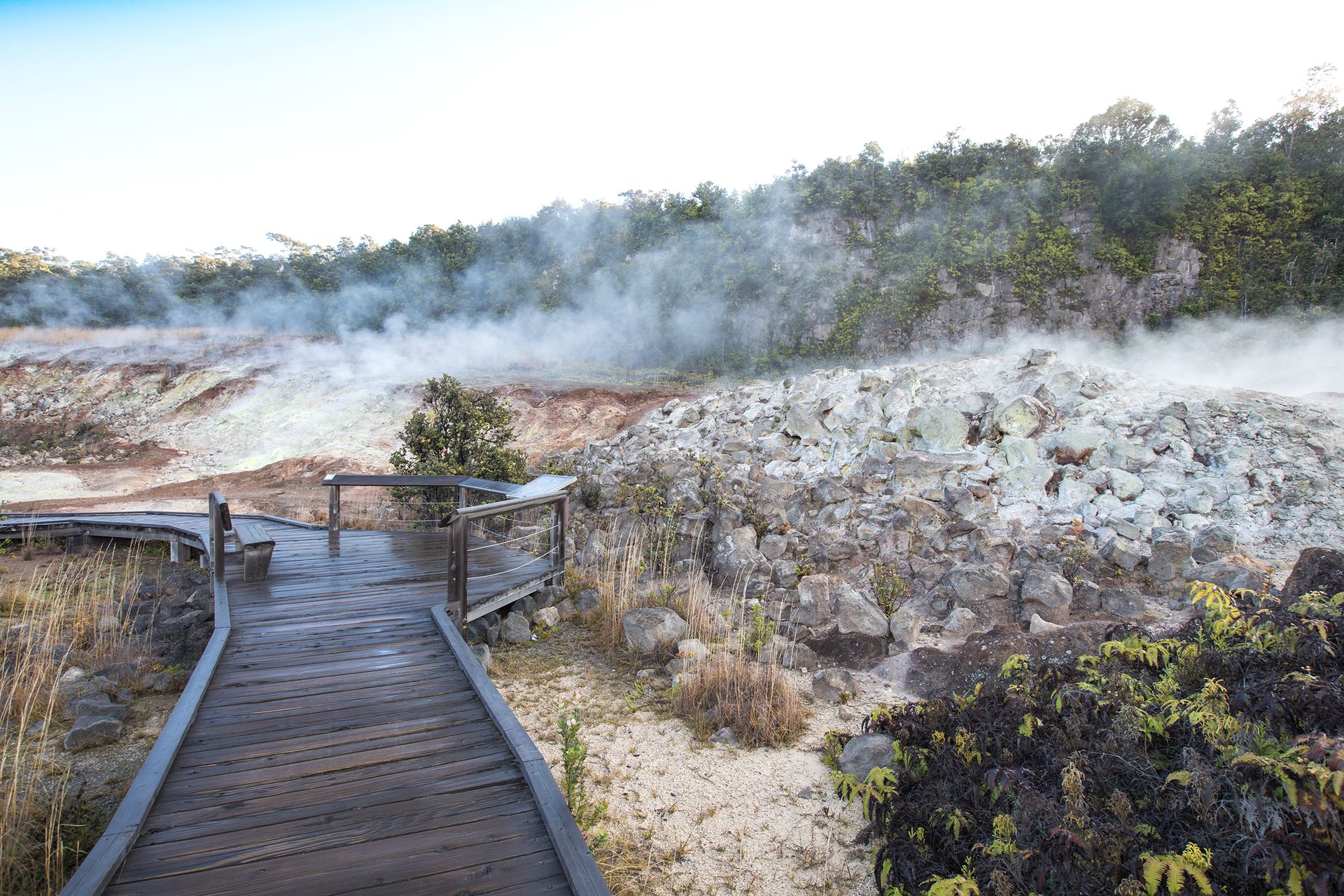
At Ha'akulamanu (Sulphur Banks), volcanic gases seep out of the ground, along with ground water steam. These fumes can be amazingly hot. In 1922, scientists drilled two holes to measure underground heat in the area. Temperature measurements remained constant at 205° F (96° C) down to 50 feet (15 m), the maximum depth drilled. Fumes emitted here include sulfur dioxide (SO₂), which smells like a struck match, and hydrogen sulfide (H₂S), the gas that smells like rotten eggs. These two gases react chemically to produce pure sulfur, a yellow mineral known to Hawaiians as kūkaepele, the waste of the volcanic deity Pele.
Take a short day hike to Haʻakulamanu (Sulphur Banks)
Learn more about the phenomenon of Steam Vents and Sulphur Banks
From the National Park Service · nps.gov
Look inside
Getting there
Directions
At Hawaiʻi Volcanoes National Park
1 Crater Rim Drive, Hawaii National Park, HI 96718
Go to Hawaiʻi Volcanoes National Park.
Get directions