LeVally-Maxwell House
About
James Oglethorpe built Frederica for defense and envisioned it as an experiment in social reform. In the 18th century, London swarmed with workmen desperately competing for the same few jobs. Economic conditions, the Georgia trustees believed, cheated everyone of a fair living and filled debtors’ prisons.
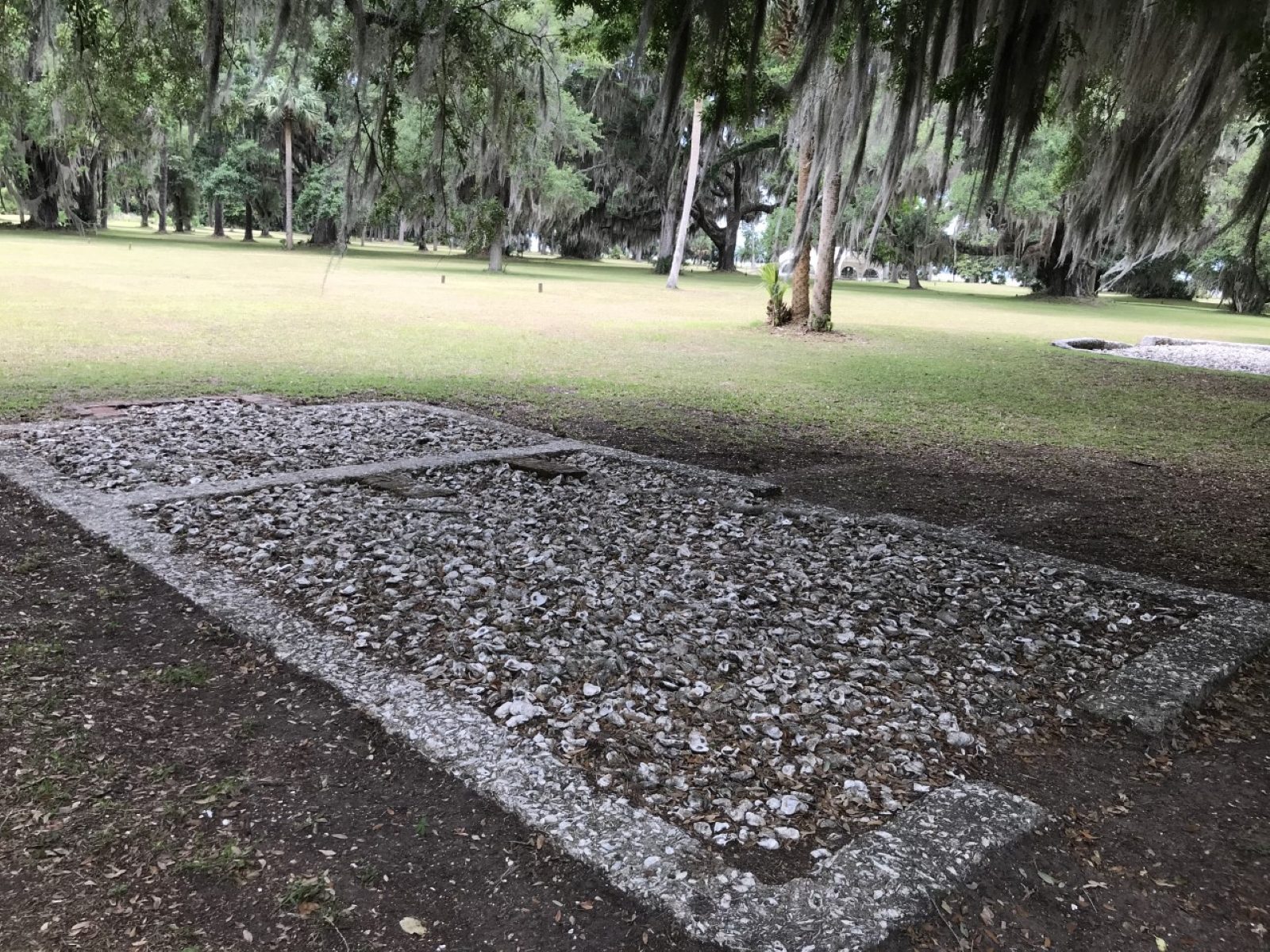
This house was the home of John Levally, Jr., a shoemaker from Charing Cross, England. Georgia welcomed men like Levally, the laborers and craftsmen Oglethorpe called England’s “worthy poor.” Georgia offered land and opportunities denied to these people in England. Like the home of Mary Musgrove, the town's interpreter to the Native American population, Levally’s house was made of tabby, a building material like concrete made from sand, lime, oyster shells and water. These materials are ample along the Georgia coast. Tabby was poured into wooden forms to build a wall one layer at a time. The word “tabby” may derive from the Spanish word tapia, which means wall, or may refer to the material’s striped texture, like a tabby cat.
Primrose Maxwell, a later occupant of this house, was a Lieutenant in Oglethrope's regiment. He payed an active role in the 1740 British attack on St. Augustine, in Spanish Florida to the south.
From the National Park Service · nps.gov
Look inside
Getting there
Directions
At Fort Frederica National Monument
6515 Frederica Rd., St. Simons Island, GA 31522
Go to Fort Frederica National Monument.
Get directionsContact
Links
Nearby
Other places within a few minutes' walk of LeVally-Maxwell House.