
River Trail Stop 3
Alerts
3 more for Cumberland Island National Seashore
About
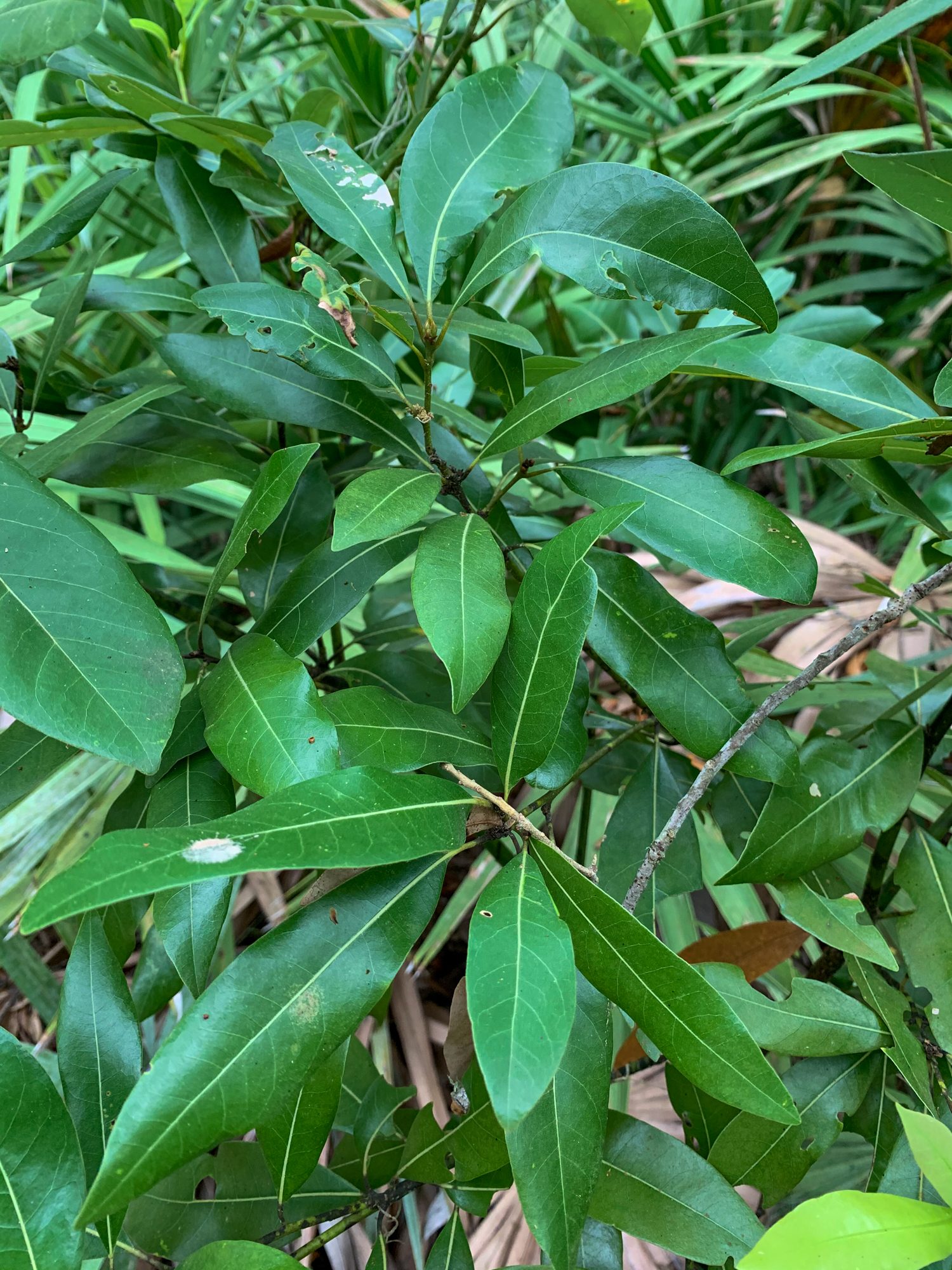
Stop #3: Red bay (Persea borbonia) When facing post number three, the red bay can be found just to the right of the post. It may have brown leaves and look dead. Smaller, younger red bay trees can also be seen further to the left and right of the post. They have large dark green leaves that appear shiny and the central vein in the leaf has an orange tint. The crushed leaves are very aromatic and were used as seasoning when cooking. Please do not pick the leaves in the park. The red bay produces round, single seeded, dark blue and purple berries in October. Many red bays have large areas of brown leaves. This is the result of an invasive beetle, the ambrosia beetle, that has introduced a fungal disease to the red bays called laurel wilt. The beetle and disease were first documented in 2002. Prior to 2002, the red bay was prevalent in the maritime forest and would have grown into a large tree. Today only young trees can be found that have not yet been subjected to laurel wilt disease.
From the National Park Service · nps.gov
Look inside
Getting there
Directions
At Cumberland Island National Seashore
113 St. Marys St W, St. Marys, GA 31558
Go to Cumberland Island National Seashore.
Get directions