
River Trail Stop 10
Alerts
3 more for Cumberland Island National Seashore
About
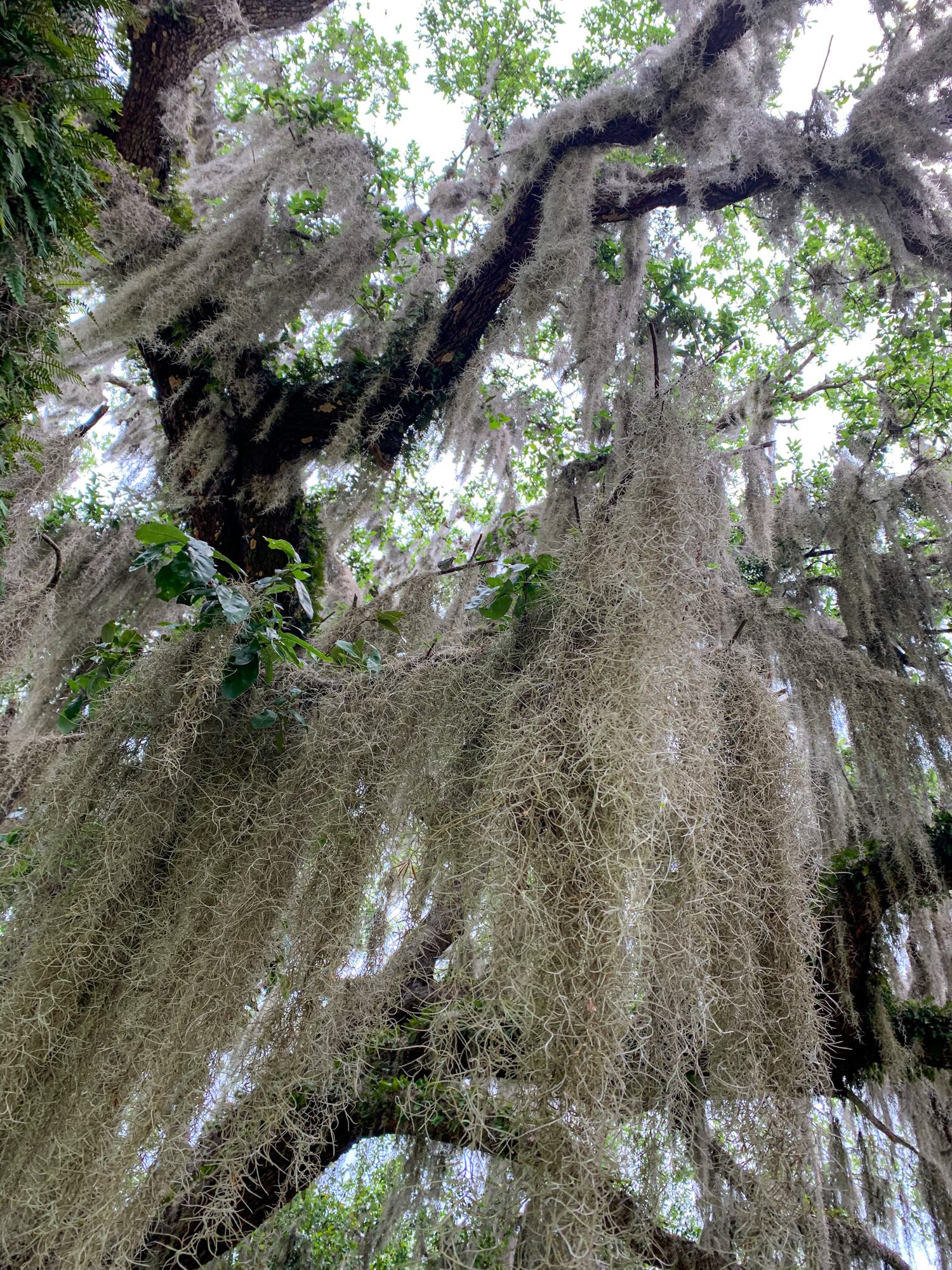
Stop #10: Spanish Moss (Tillandsia usneoides) Spanish moss hangs from the limbs of the live oak in the canopy. It can be seen the length of the River Trail as well as throughout the island’s maritime forest ecosystem. Neither Spanish nor moss, this plant is more closely related to the pineapples and other Bromeliads than any type of moss. This is an epiphyte which is a plant that collects moisture and nutrients from the air. It is not a parasite and generally does not damage branches unless it gets too dense and heavy. Many animals such as insects, bats, birds, lizards, and snakes rely on Spanish moss for shelter. Timucuan women collected the moss, smoked it over a fire or boiled it to get rid of the insects then wove it together to make a skirt or a sash. Spanish moss was used through the mid-1900s for stuffing pillows and mattresses instead of wool because moths are not drawn to it. Today it is used mostly for floral arrangements.
This is the last station on the River trail.
As you travel around the rest of the island, imagine only relying on the resources around you for survival. There are many hidden uses of the plants found on Cumberland Island that were utilized by Native Americans. The more we learn about the many uses of plants, the more we can reconnect with the natural world.
Enjoy the rest of your day on Cumberland Island!
From the National Park Service · nps.gov
Look inside
Getting there
Directions
At Cumberland Island National Seashore
113 St. Marys St W, St. Marys, GA 31558
Go to Cumberland Island National Seashore.
Get directions