
Nightingale Trail - Stop 4 Spanish Moss
Alerts
3 more for Cumberland Island National Seashore
About
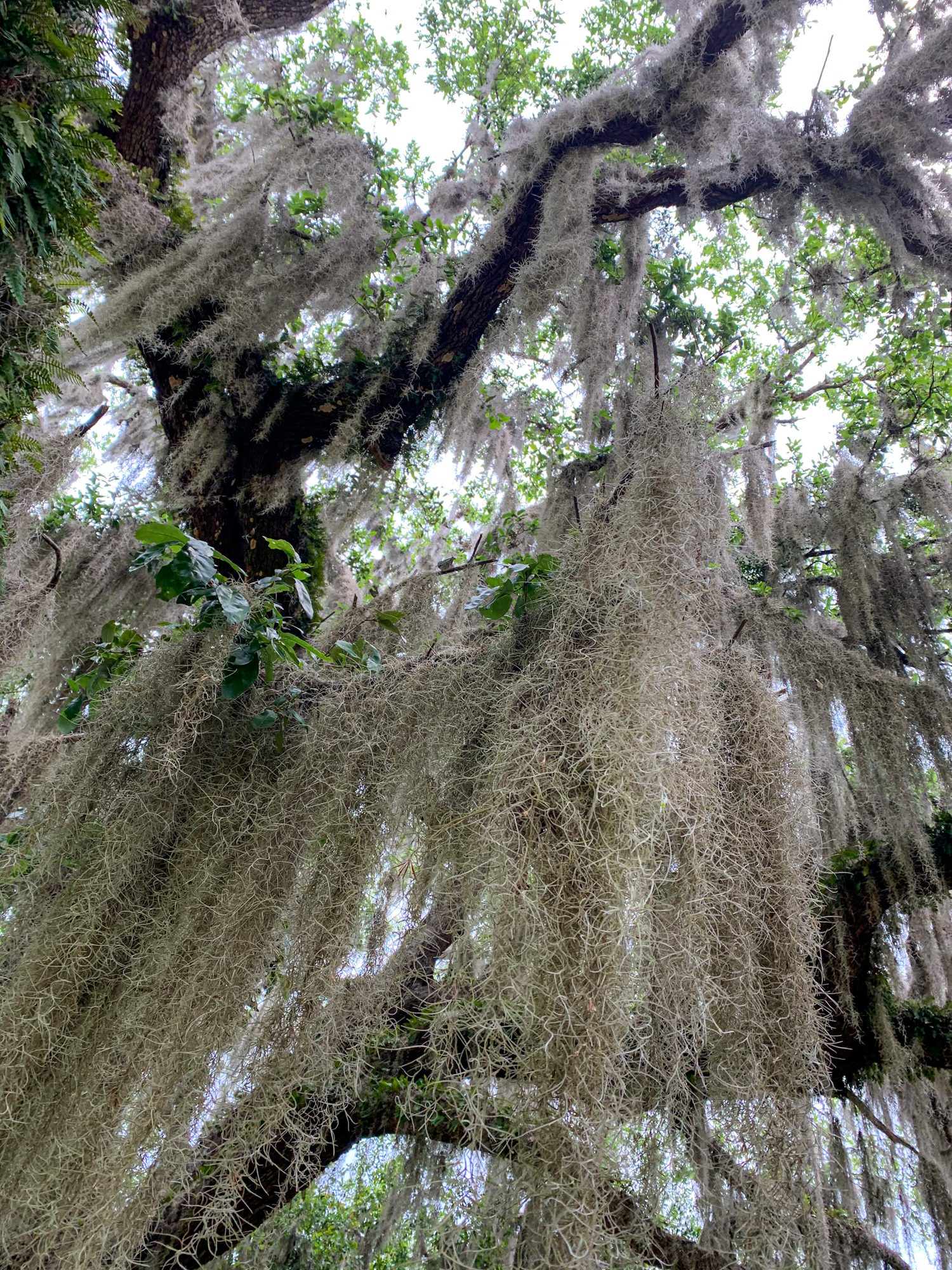
Spanish Moss “Tillandsia usneoides”
Gray “beards” hanging in the trees in front of you are not true mosses but flowering plants in the pineapple family. Spreading by tiny, parachuted seeds that settle in fissures of bark or by fragmented pieces of the plant, it is not parasitic on its host and does not harm it. The plant thrives on rain and fog, sunlight, and airborne or waterborne dust and debris. Deer, wild turkey, and horses eat the plant, but it is as nest bedding that the moss has its greatest value. In early May, the Northern Parula warbler hollows out its nest in a clump of Spanish moss and White-eyed Vireos weave strands of it into their pendant nests. Other warblers, owls, Mockingbirds and squirrels also use it to make their nests.
From the National Park Service · nps.gov
Look inside
Getting there
Directions
At Cumberland Island National Seashore
113 St. Marys St W, St. Marys, GA 31558
Go to Cumberland Island National Seashore.
Get directions