
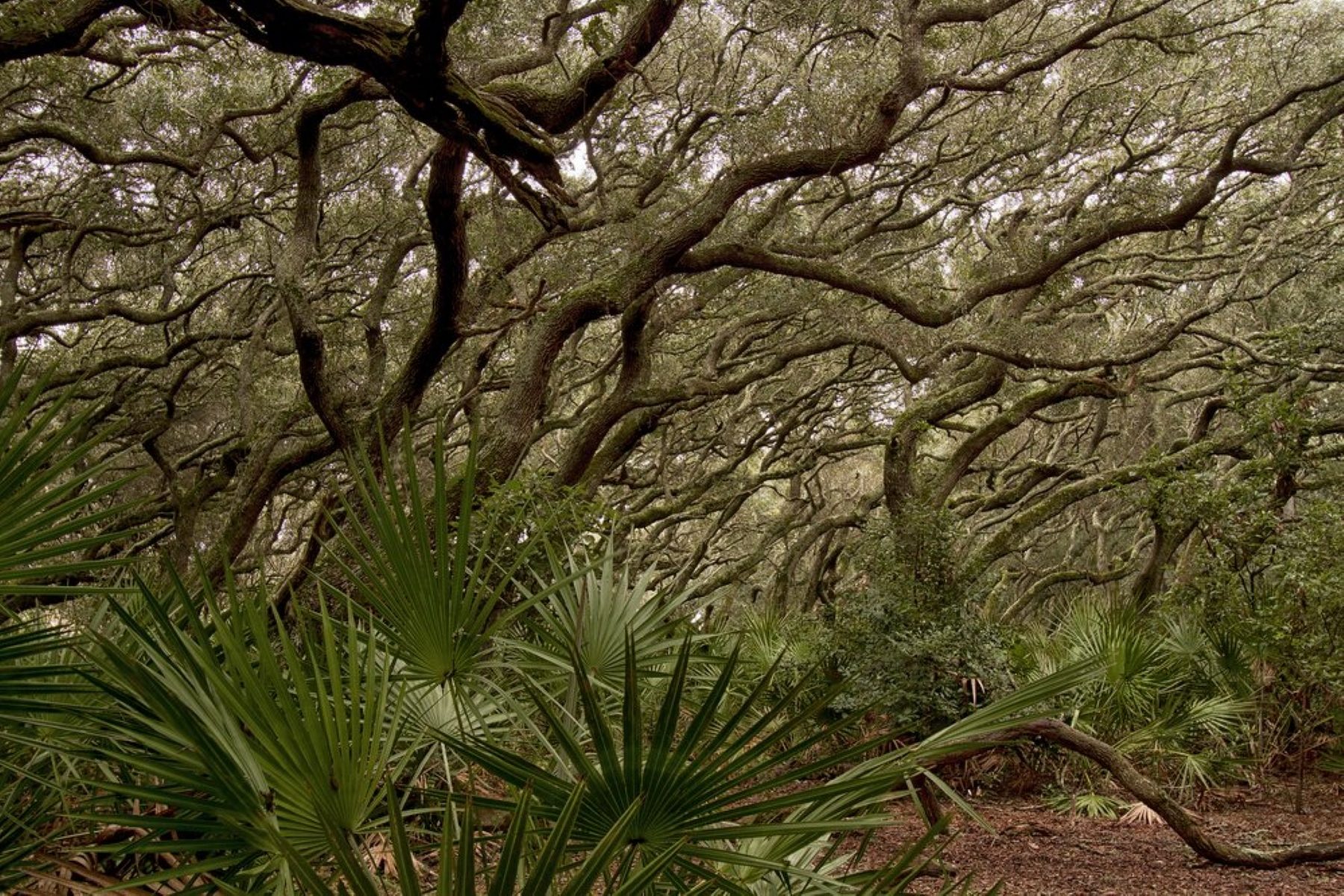
Live Oaks at Cedar Point
Alerts
1 more for Timucuan Ecological & Historic Preserve
About
Towering before you is a live oak, one of the most recognizable trees of the southeast United States. These mighty live oaks can easily reach heights of 80 feet with branches spreading out from the trunk over 100 feet. Root systems can tunnel nearly 90 feet to keep live oaks just that, alive. Because of this, if you're outside and rain moves in, winds pick up, or if the sun is just too hot, all of which are common Florida conditions on any afternoon, the live oak provides ample protection. If you find yourself in this predicament, live oaks have a few distinguishing characteristics. The trunk is short and stout while the branches tend to twist and twirl, and Spanish moss likes to grow all over. Growing along the coast, live oaks have become well-adapted to sandy soils, seabreezes, and salt spray. On coastal live oaks, it is common to see something called salt pruning, where leaves facing the salt spray die while winds force branches to curve away from the shore. Salt pruned live oaks are often smaller than inland live oaks. Shoreline erosion also threatens coastal live oaks, felling trees over time. A popular spot in the Jacksonville area to see these fallen live oaks is the shore of Big Talbot Island State Park, called "Boneyard Beach."
From the National Park Service · nps.gov
Look inside
Getting there
Directions
12713 Fort Caroline Road, Jacksonville, FL 32225
Go to Cedar Point.
Get directions