
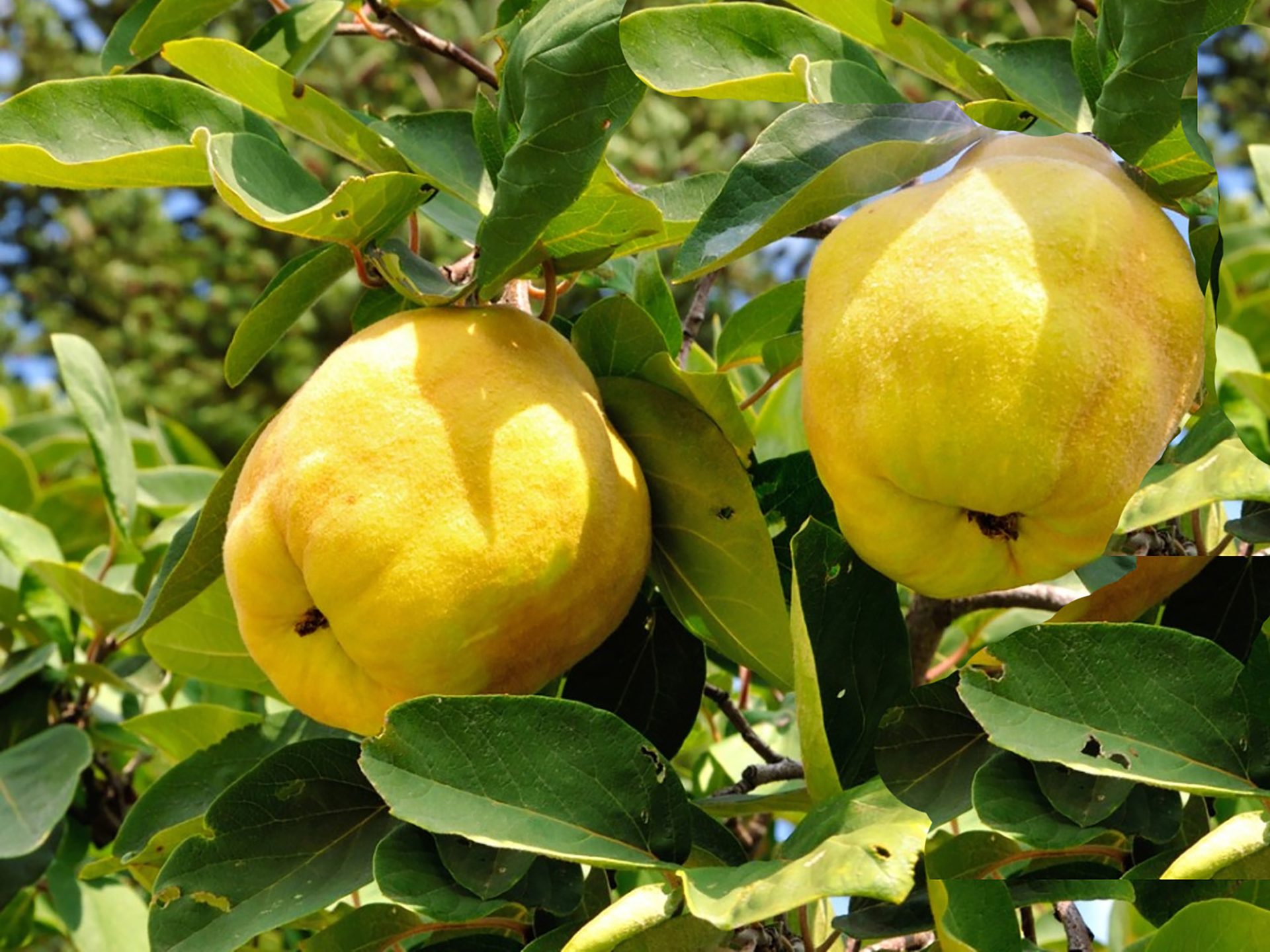
Stop 9: Quince Bush, what is it?
Alerts
1 more for John Muir National Historic Site
About
Transcript for John Muir NHS Cell Phone Tour
Stop Number 9
These large bush-like relatives of the apple and the pear are called quinces. This old-fashioned fruit is rarely seen in stores today. Quinces are not ripe until November and are usually cooked before eaten. They are often used in making jams and jellies because of a high pectin content which serves as a gelling agent.
The reason for quince use here in the Alhambra Valley has nothing to do with their taste. In Muir’s day pears were sickened by a fungus that attacked their roots. The quinces, however, were not affected. So fruit ranchers of the time grafted pear trees to quince rootstocks to help increase disease resistance.
Grafting is a common process in horticulture. A sample is taken from a species or variety you want to grow and attached to the rootstock of a related variety. For example, horticulturalists graft English walnuts, the favored variety of walnuts, onto native Black walnut root stock. This ensures healthy growth and production of the exotic variety in an area where it would normally fail.
hough Muir preferred the “wild” apples and fruits of the woods to the grafted and “tamed” ones, he realized that grafting was a crucial part of a successful agricultural business.
From the National Park Service · nps.gov
Look inside
Getting there
Directions
At John Muir National Historic Site
4202 Alhambra Ave, Martinez, CA 94553
Go to John Muir National Historic Site.
Get directionsContact
Links
Nearby
Other places within a few minutes' walk of Stop 9: Quince Bush, what is it?.
© OpenStreetMapTemporary Port Chicago Visitor CenterOpen 24 hours Grey Family Law PcHours not listed Martinez Post OfficeOpen · until 5pm · hours not verified