
Tall Trees Walking Tour Stop 13
Alerts
1 more for Redwood National and State Parks
About
Elephant Tree
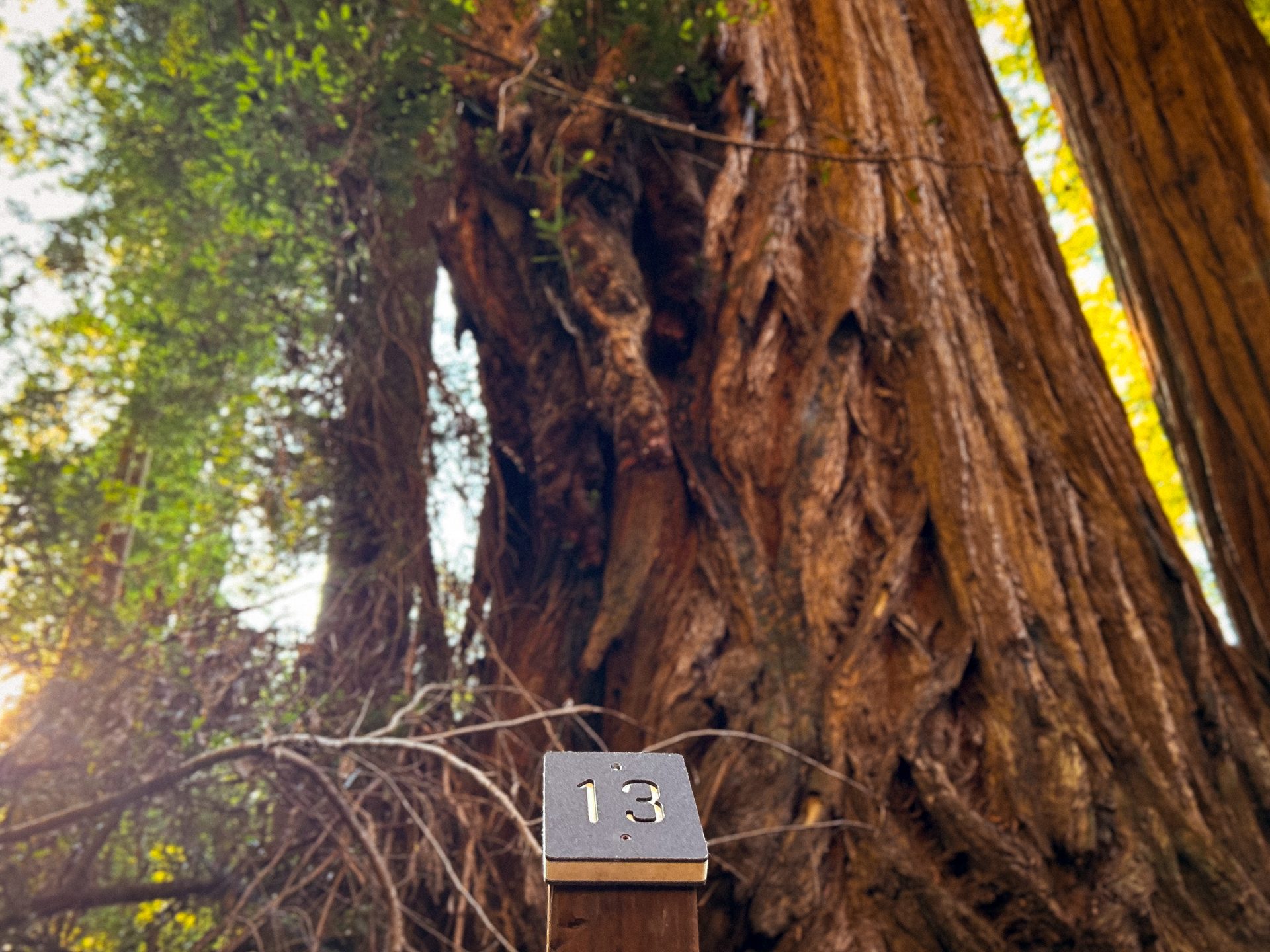
Redwoods frequently clone new sprouts in response to some form of stress or injury. These clones come in different shapes and sizes. Unlike the trees that sprout up from the burl collar around the base of a redwood, some trunks and branches in the canopy may twist and wind a multitude of directions. Most, however, grow straight upwards. You may observe that some trees have lateral branches that turn upwards 90 degrees to become what’s known as a trunk reiteration.
The burl growing off the redwood in front of you is called elephant burl. Dangling down like an elephant’s trunk, this burl often produces clones that parallel the parent tree along its side. Take a closer look, and you can see all the dormant green-yellow buds. This burl type often has stem roots hanging from it; these are roots that grow from anywhere but the main root system. Elephant burl has the potential to grow roots in soil mats high up in the canopy!
The long life of a redwood ensures it will endure many environmental changes over time. Redwoods are the only conifers that can clone themselves from burl tissue. This ability is one of the keys to this species’ ability to withstand the tests of time. As you continue towards your last stop, count how many trees have survived fire. How many fallen canopy branches (also called “widow-makers”) do you see embedded in the forest floor?
From the National Park Service · nps.gov
Look inside
Getting there
Directions
At Redwood National and State Parks
1111 Second Street, Crescent City, CA 95531
Go to Redwood National and State Parks.
Get directions