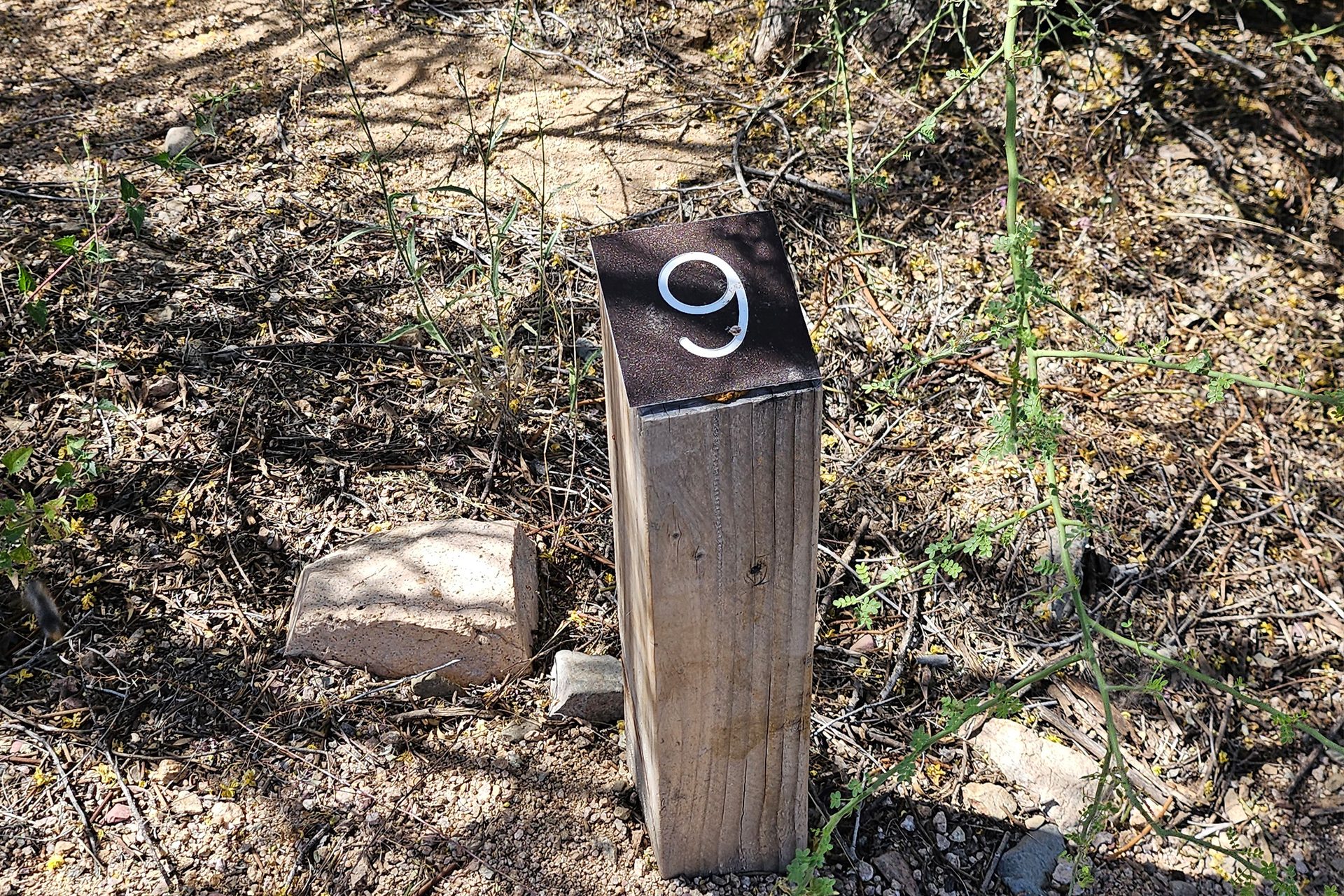
Signs of Life, Self-Guided Tour Stop 9
Alerts
4 more for Saguaro National Park
About
Stop 9: Desert Mistletoe
This palo verde tree is heavily infested with desert mistletoe, a semi-parasitic plant. As you can see, the mistletoe is green, which means that it has chlorophyll and can produce its own food by the process of photosynthesis.
However, it gets its water and nutrients directly from the tree, rather than from roots in the ground. This does not normally kill the tree— there is no advantage for a parasite that cannot move to kill its host! The primary disperser of mistletoe is a bird called the Phainopepla. These members of the Silky Flycatcher Family (Ptilogonatidae), the only ones that come into the United States, migrate vertically: they winter in the desert and spend the warmer months in the mountains. During their time in the desert, a staple food item is mistletoe berries. The berries are digested, but the seeds pass through the birds’ digestive systems and are deposited with their sticky droppings on the branches of trees. The seeds grow into the wood of the tree to start a new mistletoe plant.
From the National Park Service · nps.gov
Look inside
Getting there
Directions
3693 S Old Spanish Trail, Tucson, AZ 85730
Go to Saguaro National Park.
Get directionsContact
Links
Nearby
Other places within a few minutes' walk of Signs of Life, Self-Guided Tour Stop 9.